
- in Adventures
Digital Nomad Facts – Skills That Will Increase Your Chances of Being Hired

Do you want to earn a living as a digital nomad, but don’t quite know where to start? Do you want to increase your income each year while building a list of dependable clients?
One of the best ways to enjoy a career as a digital nomad is to hone the in-demand skills clients are looking for.
When you’re a freelancer hoping for a long and prosperous career as a digital nomad, here are five essential skills that can significantly improve your hire rate.
Blogging/Blog Management
If you have your own blog or have previously managed your own blog, your chances of being hired increase significantly.
Employers look for freelancers who have a way with words and can prove they know how to reach an online audience.
When you manage your own blog, you stand out from other on-demand workers with no content marketing experience.
We do live in the digital for the last decades, it’s about time you showed some of your digital savvy via a blog–think of it as a portfolio piece to prove that you are no newbie to the digital realm.

Digital Marketing
Speaking of marketing, nomads with digital marketing experience have a definite advantage over those with no online marketing experience.
From social media outreach to SMS marketing, today’s employer wants to work with a freelancer who isn’t new to the digital marketing space.
Training takes time; if you can hit the ground running, employers will tend to hire you over a candidate with no marketing expertise.
Areas of focus for digital marketing include:
- Facebook Advertising
- Google Adwords
- Copy Writing
- Bing Ads
- SEO (see below)
- Conversion Rate Optimization CRO
There are many more skill in the marketing space, best would be to focus your skills in a few area while being conversant in many, check out the T-shaped marketer to choose a path that fits your personality.
Customer Service
Customer service is another skill that translates well to freelancing.
Whether you have previously worked as a barista or retail sales clerk, your customer service experience shows that you know how to work with the public.
Most employers won’t want to know the specifics of your customer service jobs, but they’ll be glad you have basic customer service skills like need assessment and sales.
SEO
A digital nomad with search engine optimization skills has a much greater chance of being hired over one with no SEO experience.
When you can prove to a potential employer you have the skills necessary to improve their search engine placement, you’ll go to the top of their candidate list.
Even better, if you have your one blog (see skill #1 above), then build some white hat links and rank it for something. Once that has been accomplished, you have a perfect example to show to an employer that you actually know what you are doing.

Email Marketing
Email outreach is a crucial outreach tool in today’s increasingly noisy social media world.
Many employers are finding their social media reach is dwindling and are transferring some of their marketing budget to email outreach instead.
Once you have previously run successful email marketing campaigns, an employer knows they won’t have to start from scratch with your training.
Improving your opportunities as a digital nomad comes down to honing the skills employers are looking for.
You can’t expect your annual income to increase if you aren’t actively improving your skill sets.
Work on the five above-listed talents and you just might be able to land more clients while traveling the globe as a digital nomad.
Even better than picking up skills are your own, there has been a recent uptick apprenticeships, or learning under someone (or an organization) that has mastered the skills you desire to make a living from.
A few examples include Empire Flippers, Taylor Pearson’s GetApprentice and the TropicalMBA’s program.
More Nomad Life | Digital | Location Independent
- in Adventures
Buddhism and the Mysticism of Emptiness

Buddhism is historically, doctrinally, and philosophically diverse.
Theravada, Mahayana, Zen, and other forms of Buddhism all have different ideas on life, death, the cosmos, and even the nature of the Buddha.
Monks in these traditions live by different monastic codes, practices, rules, and philosophies.
So what makes all of these traditions Buddhist?
One could perhaps point to many different examples, but the strongest element tying all of Buddhism together is its deep mysticism of emptiness.
Buddhism is an intensely mystical religion. It is based on the mystical experience and revelation of one man, the Buddha.
This experience was one in which he attained nirvana, an indescribable and fundamentally empty state. Nirvana is empty because it is unconditioned and free of all distinctions.
In nirvana, the self is released of all desires and thoughts. All Buddhist mysticism, no matter how diverse, stems from this one initial mystical impulse, from the quest to emulate the Buddha and find emptiness.
Theravada
Theravada continued on this initial quest for nirvana, presenting it as the ultimate goal for Buddhist monks.
Monks strive to attain the supreme enlightenment so that they may finally bring an end to the conditioned existence of desire and suffering.
Once they have reached this stage they may be called “arhats,” meaning that they have become “perfected ones.” One can attain nirvana through meditation and “right concentration.”
In other words, a monk must cultivate the correct mystical consciousness in order to realize a perfect state of emptiness.

Mahayana
Mahayana Buddhism changed the ultimate goal from nirvana to attainment of Buddhahood itself.
Important Mahayana literature such as the Perfection of Wisdom texts focuses on the Suchness of the Buddha, and describes it as the ultimate reality, the inexhaustible essence within each and every single one of us.
Most importantly, this Suchness is also “empty.”
Emptiness is neither existent nor non-existent. It is nothing and everything at the same time. It is paradoxically only attainable by Buddhas, and yet each and every single being is at every single moment already fundamentally empty.
Japanese Zen Buddhism
Japanese Zen Buddhism takes this one step further by arguing that the desire for enlightenment, whether as nirvana or Buddhahood, must ultimately be abandoned as well.
The pursuit of emptiness means that one must be willing to let go of absolutely everything. Depending on or following the words of the Buddha will not lead one to true emptiness.
Zen does away with all logic and reason and instead attempts to provoke in the mind a sudden moment of illumination through the use of paradoxical sayings.

Different Buddhist would disagree on where and what emptiness actually is.
Is it nirvana, Buddhahood, or can it be found only by letting go of these sorts of concepts?
The answers to these questions vary, but in whatever way it is conceived it is emptiness that drives Buddhist mysticism.
More Mystical Travel
- in Adventures , Trekking Poles
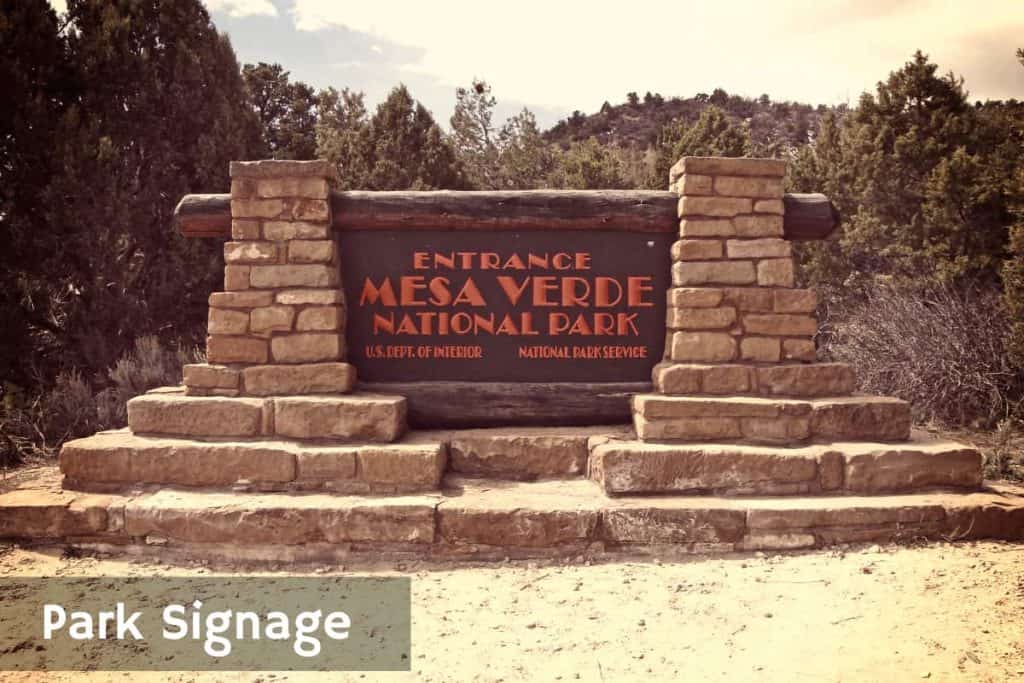
Explore History and Nature at Mesa Verde National Park

Home to 4,500 archaeological sites–including the 600 cliff dwellings that have made it world-famous–Mesa Verde National Park offers visitors an unparalleled opportunity to step into the past.
Located in southwestern Colorado, Mesa Verde is easily reached via U.S. Highway 160 either from Cortez to the west or Durango to the east.
Because Mesa Verde mixes both a treasure trove of archaeological wonders with natural splendor, it is unique in the National Park System and does require a fair bit of planning in order to be enjoyed fully.
Visiting the Famed Mesa Verde Cliff Dwellings
The highlight of any trip to Mesa Verde National Park is a visit to the cliff dwellings, built by the Ancestral Pueblo People during the 13th century.
The most famous cliff dwelling, the Cliff Palace, is a sprawling complex of sandstone walls, rooms, and towers nestled precariously underneath a massive overhanging cliff.
During the summer months, visits to the Cliff Palace–as well as to the Long House and the nearby Balcony House–are by ranger-guided tours only, which require a ticket that can be purchased at the Visitor Center at the park entrance.
Since the drive from the park entrance to the cliff dwellings can easily take an hour depending on traffic, be sure to purchase these tickets beforehand.

Not all cliff dwellings require a ticket, however, and some are open to self-guided tours.
Spruce Tree House, for example, is the best preserved cliff dwelling in the park and is free to visit as is the Step House, which includes a restored pit house.
Other archaeological sites are strewn throughout the park, including the Square Tower House and the Sun Temple.
The latter site, in addition to being an impressive archaeological site in its own right, also gives visitors exceptional views of the Cliff Palace.
Timing your Visit
Also remember that although the park is open 24 hours, the cliff dwellings and many archaeological sites are not, with most closing before dusk. Also, the Wetherill Mesa area, which includes the Long House and Step House, are closed October through April.
The rest of the park is open all year.
What else?
While the cliff dwellings are the main draw of Mesa Verde, it quickly becomes apparent to most visitors that history isn’t the only thing this park has to offer.
The road from the park entrance to the cliff dwellings, for example, snakes its way over mountains and through canyons, affording visitors spectacular views of the Mancos Valley and Montezuma Valley to the north.
Bicycling is also permitted on the main park road between the park entrance and Chapin Mesa, although it can be grueling even for experienced bikers and the narrow and twisting road make distracted drivers a problem.
While Wetherill Mesa Road is closed to bicycles, the Long House Loop, located at Wetherill Mesa itself, is open to bikes and, thankfully, closed to motorized vehicles.
Hiking is also a popular activity in the park, with many trails taking hikers through scenic landscapes and past historic sites.
Although many trails are relatively short, most of them include steep elevation changes that can make them difficult in hot weather or after rainfall.
Because of the sensitive archaeological nature of the park, hikers are required to stay on marked trails at all times.
Two trails, the Spruce Canyon Trail and the Petroglyph Point Trail, require hikers to register beforehand either at the trailhead or at the Chapin Mesa Archaeological Museum.
Accommodation in Mesa Verde
While the main sights can be done in one day, those looking to visit at a more relaxed pace will probably want to stay a night or two.
Far View Lodge is the park’s only hotel and has restaurants, gift shops, groceries, and other amenities. Located at the junction of the main park road and Wetherill Mesa Road, it is also a prime spot for exploring the various attractions in the park.
The park also has a large campground, Morefield Campground, located near the park entrance, which has hookups, a gas station, grocery store, RV dump station, amphitheater, and laundromat.

Many of the park’s best trails are also located here. While the campground is first-come, first-served all year round, space is almost always available. Both Morefield Campground and Far View Lodge are open only from spring to fall.
Backcountry camping is not permitted.
Mesa Verde National Park is one of the few places where history and nature combine to provoke awe and wonder in visitors.
One of America’s first World Heritage Sites, Mesa Verde continues to be an inspirational place entirely unlike any other in the world.
Get Your Hiking Adventure Trekking
- in Trekking Poles , Adventures
A Short Guide to Hiking in Slovenia’s Triglav National Park

The best of Slovenia’s Alps are contained within Triglav National Park, which is named for Mt. Triglav, the park’s highest peak (2,864 meters).
The mountains in Slovenia’s borders are somewhat smaller than those found in Italy or Austria. However, they are no less scenic.
There are plenty of challenging climbs and breathtaking viewpoints that will satisfy the most avid hiker.
Here are a few tips to help you make the most out of a trek through Triglav National Park.

Church of St John the Baptist, Bohinj Lake, Slovenia
Plan at least two days on the trail to reach the summit.
Slovenians consider it a rite of passage to stand atop the country’s highest peak.
The summit can be approached from several directions, but in most cases, a round trip will take an experienced hiker 16-18 hours.
Basically, hiking Triglav in one day is doable, but you will wear yourself out.
Do yourself a favor and plan to stay overnight in the park.

Julian Alps in Triglav National Park
You will enjoy the hike a lot more since you won’t be rushed.
Make reservations beforehand at one of the mountain huts. Camping in the park is illegal, so you’ll need to reserve a spot at the Alpine Club’s mountain huts to stay overnight.
A dorm bed will run you 20 euros (less if you can show an Alpine Club card). Hot food is available, but generally expensive. It’s a good idea to bring extra snacks.
You can obtain a comprehensive list of hut phone numbers from any tourist office. You will need to reserve by phone at least a few days in advance for the more popular huts.
It’s often easier to get a spot mid-week as more locals head to the park on weekends. Some hikers show up without a reservation, which is risky and tends to annoy the hut managers.
Ascend by way of Voje Valley towards Mt. Triglav and descend through Seven Lakes Valley.
If you want to ascend Mt. Triglav and get a proper tour of the park, this is by far the most scenic route.
When you take this route, plan for a two-night trek.
The best hut to stay at for the first night is Dom Planika pod Triglavom (aka “Planika”).
You can check in, drop your bags and ascend Triglav on your first day, or save the ascent for the morning of your second day.
Reserve your second night in one of the huts in the Seven Lakes Valley region.
From Seven Lakes Valley, you will descend into the Bohinj Lake Valley on your third day.
Breaking up this route into three days will give you plenty of time to enjoy the scenery.

Pericnik waterfall in Triglav National Park, Julian Alps, Slovenia.
Check your shoes before commencing your hike.
The alps contain rocky, steep and difficult terrain. When your shoes fall apart mid-hike, you may have a very difficult time continuing your journey and getting back to town.
If your shoes are more than a few years old, you may want to consider replacing them before taking on the Alps.
See how to break in hiking shoe to prepare for better comfort during your Triglav National Park hike.
Bring hiking poles.
Even if you’re young and spry, poles can help enhance both safety and stamina.
Hiking poles are useful for traversing slippery rocks and steep slopes. They will also greatly ease the strain on your knees during steep descents. The alps are serious mountains, so bring serious equipment.
Don’t Forget a Good Map
Buy a good map.
Topographical trail maps are easily purchased from the tourist offices.
A map with full detail will help you plan your route, learn more about the area, and locate nearby huts should you find yourself in an emergency.
More Hiking Adventures
- in Adventures
Five Great Reasons to Make Nova Scotia Your Vacation Destination

With summer fast approaching, it’s time to begin planning the perfect vacation—and this year, you can skip the debate about where to go.
Nova Scotia, Canada, has always been popular with tourists, but this summer, everything is lining up to make it the ultimate destination for every traveler’s needs.
Here are just five of the many reasons to choose Nova Scotia:
1) It’s Breathtakingly Beautiful
Known for its diverse landscape and stunning natural beauty, Nova Scotia has it all.
Miles of coastline offer access to white sand beaches or rugged rocky shores, and a network of well-maintained highways lead you through charming ocean-side villages and thriving agricultural towns.
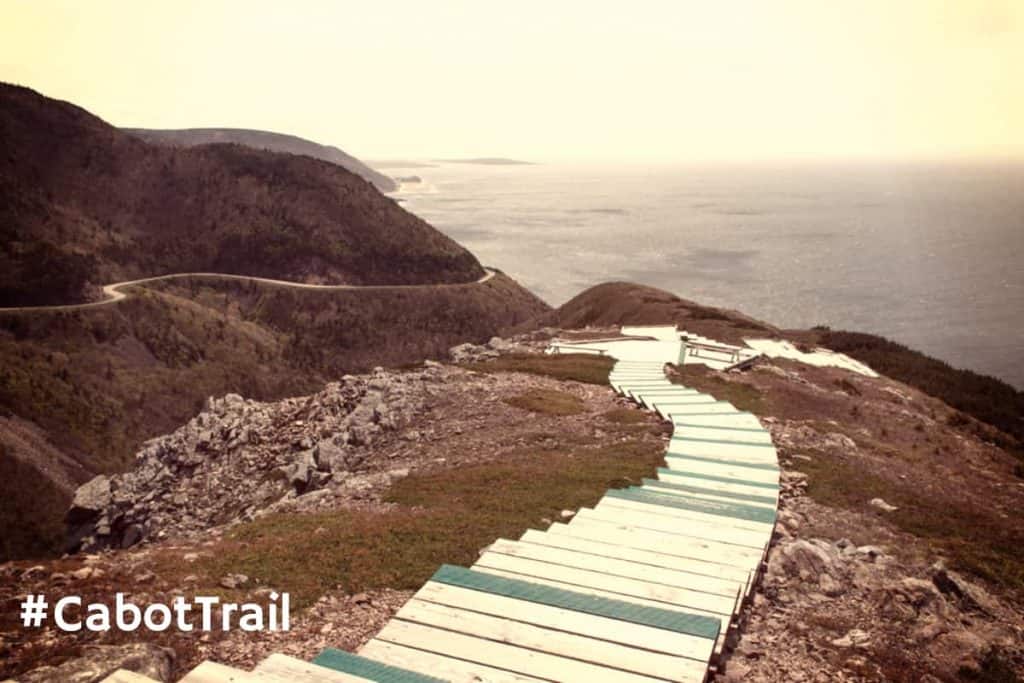
The looming highlands of the Cabot Trail on Cape Breton Island offer dramatic vistas, while trails along the Atlantic Coast and the Kejimkujik Sea Adjunct offer the chance to glimpse marine wildlife in their natural habitat.
Take in the sight of the innumerable islands of Mahone Bay from shore or on a watercraft, and enjoy the striking effect of a bay full of sails during Chester’s race week.
With numerous picturesque communities and designated look-offs around the province, when it comes to photo-ops, Nova Scotia is sure to impress.
2) It’s Entertaining
Nova Scotia is known across Canada for having the nicest, most fun-loving population in the country – and what makes Nova Scotians so friendly?
Perhaps it’s all the interesting things going on around the province.
For urbanites, the capital city of Halifax offers a thriving arts scene.
Live music venues, theatres, restaurants, galleries and museums (like the Art Gallery of Nova Scotia) abound, and the city’s popular waterfront boardwalk is alive with buskers and vendors all day long.
Whale watching and deep-sea fishing expeditions operate out of a number of different towns, while a leisurely tour of the vineyards of the Annapolis Valley is available for those who prefer to keep both feet on land.
The province boasts a popular craft beer scene, folk music, crafts, many excellent festivals, and no end of annual events and must-see destinations in every region.

3) It’s Adventurous
With so much rugged wilderness, it is no surprise that Nova Scotia is a No. 1 destination for outdoor adventurers in North America.
Offering a plethora of hiking trails through a variety of ecosystems and terrains, adventurers can experience many different landscapes within a few hours’ drive.
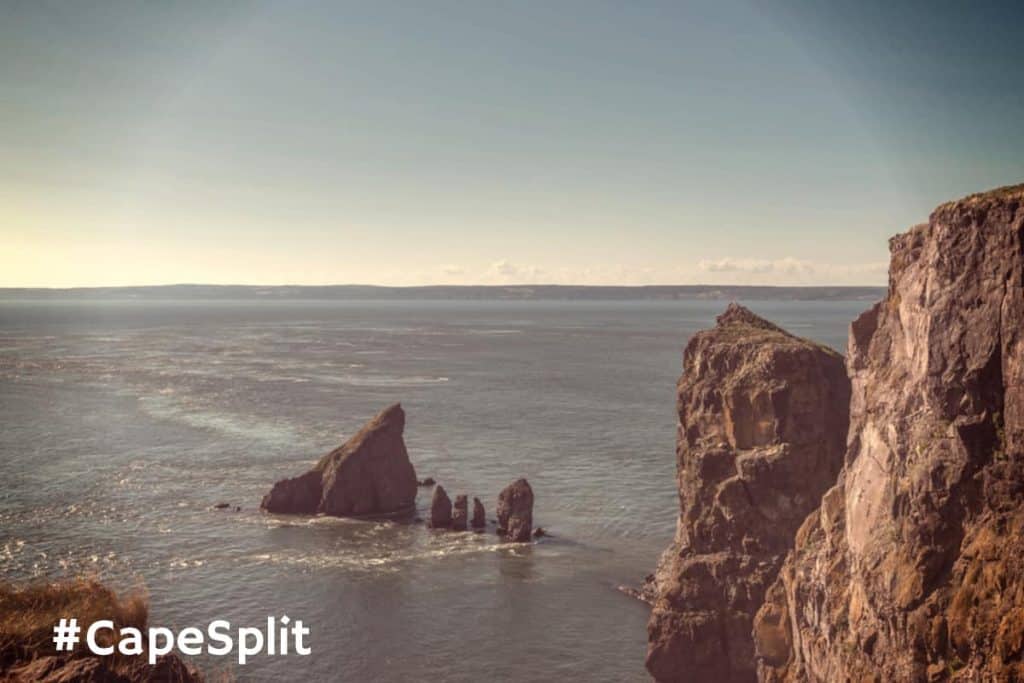
You could conquer Cape Split on foot or mountain bike, go sea-kayaking along the wild Eastern Shore or the Bras D’Or Lakes, surf or parasail at one of the province’s stunning beaches, or go zip lining at in the mountains at Martock.
The possibilities for outdoor adventure are endless, but the fun doesn’t stop there!
Nova Scotia is well known for its stories of haunting and pirate treasure.
The supernaturally inclined can go on any number of chilling ghost walks, and can keep a wary eye open for the flaming ghost-ship of the Northumberland Strait.
Treasure seekers can ask the locals about the infamous Treasure Pit of Oak Island, or go panning for gold at the Ovens Provincial Park.
There is even excitement for those who seek less conventional thrills, who can investigate the mass UFO sighting of 1967, locally known as the Shag Harbour Incident.
4) It’s Historic
As home to the Mi’kMaq First Nation and one of the earliest locations of European settlement in North America, attractions for the history buff abound in Nova Scotia.
For the more relaxed traveler, the historic sites at the Halifax Citadel, Fortress of Louisbourg, Fort Anne, or the Habitation offer guided tours and live reenactments by costumed performers that are sure to spark your interest.
For those willing to venture into more rugged terrain, the trails of Kejimkujik National Park harbor historic Mi’kMaq petroglyphs, and the Canso Island National Historic Site offers artifacts from the Dummer’s war and one of the earliest fishing settlements in North America.
Literature fans can explore the land of Evangeline and mull over the Acadian Expulsion at Grand Pré, rockhounds can comb the fossil-rich shorelines of the Bay of Fundy or examine the displays at Joggins and Blue Rock, and those who like to mix history and adventure can descend into the coal mines at the Cape Breton Miners Museum.
5) It’s Accessible
Today, the attractions of Nova Scotia are more accessible than ever.
With service from two major ferries (Yarmouth and Digby), Via Rail, the Trans-Canada Highway, and an international airport with connecting flights from across North America, getting here is easy and enjoyable.
A low Canadian dollar means that travelers from the USA will enjoy an excellent rate of exchange, boosting the affordability of all of the exciting activities on offer, and there are a range of charming accommodations available in every town.
The icing on the cake is that, in celebration of the 150th anniversary of the Confederation of Canada, general admission to all Parks Canada sites is free when you order the no-cost pass from the Parks Canada website.
So get your free parks pass and hit the trails – you’re not going to want to miss an adventure this summer in Nova Scotia!
