
- in Adventures
Five Major Benefits of Being a Digital Nomad

Remote working was virtually unheard of only a few decades ago. Having a full-time job usually meant working in the same place every day, with a fixed schedule and the same group of colleagues.
With the internet having become more widespread, it is now much easier for people to work remotely.
Over the past few years, a whole movement based on working remotely while traveling the globe has emerged. “Digital nomads,” as they are commonly known, typically have jobs which allow them to be fully remote, such as translation, computer programming or writing.
Here are five major benefits of the digital nomad lifestyle:

1. You can live almost anywhere you like
You can base yourself anywhere that’s equipped with electricity and a reliable internet connection. There are even websites that rate top digital nomad destinations, for example Nomadlist, you can see it here.
Looking for something more fantastic, if you’ve always wanted to live by the ocean, or in the shadow of a mountain, now you can.
There’s no need to live in an overcrowded, polluted city just because that’s where all the jobs are.

Also read: Top 5 Cities to Live as a Digital Nomad
2. You can make time differences work for you
Some digital nomads are lucky enough to be able to set their own schedules and work whenever it suits them.
Others need to work fixed hours, especially if they need to be available to take calls or participate in video conferences.
However, even if you fall into the second group, you can make the time difference work for you.
When you’re a night owl, try living somewhere which is 10-plus hours ahead or behind your home country, so that you can work until the early hours while still being able to take calls and contact your team.
When we asked Richard McGirr the founder of Visichain.io, a Hong Kong based Digital Transformation consultancy that specializes in supply chain and procurement digitization, his views on employing digital nomads, he said:
“Our company utilizes a few digital nomads some based in Eastern Europe, and a few in the Philippines, while we also tend to hire the best contractors for specific projects no matter where they are….the top reasons we hire both task based and full time digital nomads are to 1) leverage time shifts, so we can service our clients 24/7; 2) leverage lower cost countries with equivalent or better cost for value; and, 3) loyalty, our remote workers that have flexibility in their location tend to stay with us longer”

Also read: Travel + Work: Synching Across Multiple Time Zones (When on the Road)
3. You don’t have to put up with colleagues
One of the biggest problems you might have at work is dealing with annoying colleagues, whether they won’t stop talking when you’re trying to concentrate, or they have a taste for stinky egg sandwiches which they eat at their desk.
Working remotely usually means working alone, from the comfort and privacy of your own home.
If you do get lonely, you can always use a co-working space to meet other digital nomads; unlike traditional working environments, it’s totally up to you.

Also read: Outsourced Ecommerce Fulfillment Allows for Location Independence, Run a Biz While YOU Travel
4. You can move around regularly
As the name implies, digital nomads are free to move around as much as they want to.
Many stay put in one place for several months, or even years, but others choose to relocate more often.
As soon as you feel the need for a change of scenery, you can book your next flight and go.
Lots of nomads even travel with carry-on luggage only, to make it even cheaper and easier to work while on the move.

Also read: Getting Ready For the Backpacking Season
5. You have much more free time
People with regular 9-to-5 jobs usually have to commute. That means a lot of wasted time, whether they’re waiting for delayed trains or crawling along the freeway in rush-hour traffic.
When you’re a digital nomad, going to work can be as easy as walking downstairs and setting up your laptop on the kitchen table, which can save many of you up to two or three hours per day.
You can use that extra time to catch up with friends, pick up some new skills–like hiking or Mandarin–or just wake up later in the morning.

Also read: Essentials for a Safe, Enjoyable Hiking Trip
Remote Work Isn’t for Everyone
The digital nomad lifestyle is definitely not for everyone; it wouldn’t suit those who have time-management issues or need to be close to family and friends.
However, it can be an eye-opening experience for those who struggle to fit into traditional workplaces or who want to see more of the world without being limited to a few weeks of vacation time per year.
Why not give it a try?

- in Trekking Poles , Adventures
Top Two Extreme Camping Experiences

Have you ever dreamed of camping in the treetops or pitching your tent high on a mountain cliff? Those risk-takers, who like to flirt with danger, thrive on such experiences.
Extreme camping certainly isn’t for everyone, but this type of camping is becoming more common among those who love experiences that test their strength and endurance.
They thrive on that feeling of pure ecstasy. Imagine yourself spending the night in pitch black, sleeping in a hammock high in the treetops.
How about setting up camp on a sheer cliff far above the ground?
Tree Camping 200 Feet Up
Tree camping is gaining popularity in places around the world. Within the United States, one well-known spot is in The Willamette National Forest in Oregon near Blue River with the Pacific Tree Climbing Institute.
Get ready for the thrill of a life-time. The “campsites” are at least 200 feet up a 500 year- old Douglas Fir.
Guides will outfit you with all needed equipment. This extreme experience will cost you about $600 per person.
You will be issued harnesses and helmets. Now the work begins. It’s time to pull yourself up with attached ropes and cables to your campsite. If you get queasy with heights, don’t look down!
When you reach your destination, you will no doubt be exhausted. Your ‘tree boat” should be ready for you to climb in. This device is a sturdy hammock attached between the tree trunk and a large branch. As you dangle high above the ground, enjoy the gorgeous view.
Soon daylight will be gone and it will be pitch black. Fatigue from the climb as well as the swaying of your hammock, should put you right to sleep.
Morning arrives and you are wondering what you’re doing up in a tree. Room service responds by bringing a cup of hot coffee and a warm face wash.
Your extreme tree camping is over and preparation for the descent is next. You may be contemplating whether this is a once in a lifetime event or an annual event.
Extreme Cliff Camping
If you get an adrenaline rush thinking about “hanging out” against a sheer cliff at a dizzying height, extreme cliff camping may be just what you’re looking for.
For a number of years, rock climbers have used ledges and hanging tents to sleep and eat on climbs of more than one day. Now it’s becoming a popular extreme experience to climb a sheer cliff and set up camp for the fabulous views and just for the thrill of it all.
For ordinary ground-level campers, it’s enough of a challenge to securely set up a tent on the ground, but imagine attaching a portaledge (tent structure) to a sheer cliff many feet up.
The portaledge tents of the 1950s were fairly rustic and not too comfortable. More modern styles today have a stable ground support with a metal frame attached to straps that hang from the campsite at one single place.
The campers have a feeling of security and can comfortably relax and sleep after their tiring climbs. You can use single or double tents. With these stable tents you can move around a bit – do some cooking, read, play games and enjoy other life pleasures.
What is the big draw of this kind of outdoor experience? Some extreme campers explain that cliff camping gets the adrenaline going so strong that you feel like you’re literally “on the edge” of living life to the utmost.
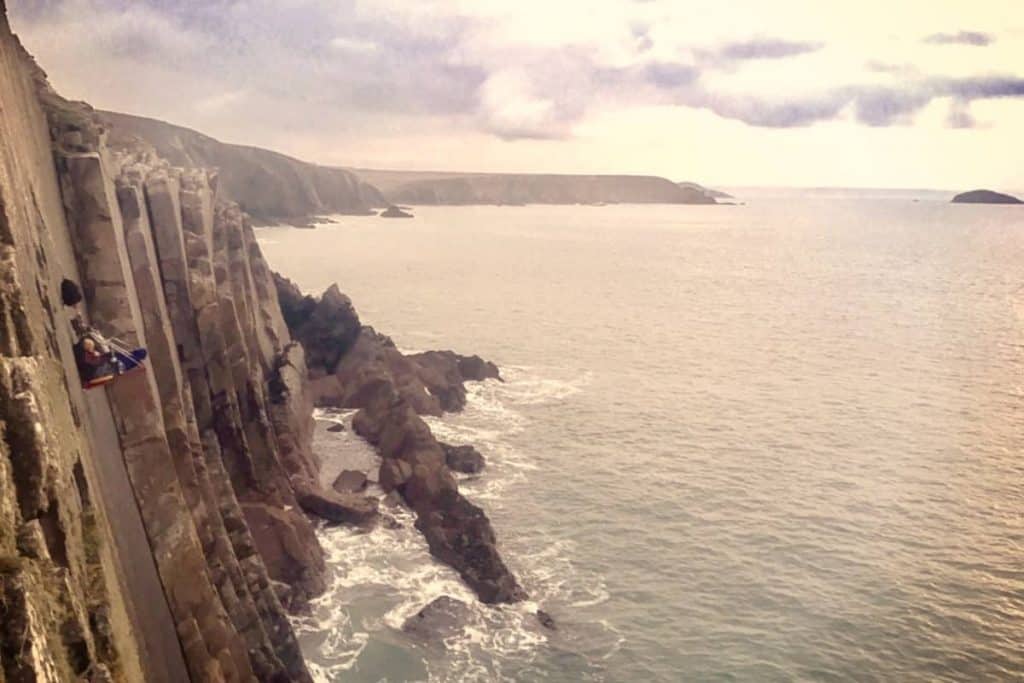
Where are the hot spots for this ultimate extreme activity?
- Yosemite National Park in California is one very popular location.
- A resort in German Bavaria, Waldseilgarten, offers some amazing sites 2000 meters straight up.
- Cliff camping in Pembrokeshire
More and more people, who have only dreamed of experiencing life on the edge and up high, are living out their dream as extreme camping is becoming more common in places around the world.
Equipment is becoming safer and more comfortable.
The adrenaline rush is on for the extreme risk-takers of the world.
More Heroic Adventures
- in Adventures
Top 5 Cities to Live as a Digital Nomad
As the internet has given people the ability to work remotely, some have abandoned the old lifestyle of being tied to a place and 9-to-5 job.
Digital nomads travel the world, working from places as diverse and bohemian as an internet cafe in Prague or a beach in Bali.
Their geographically independent lifestyle lets them choose the cities with the lowest living costs, best climate or best local food.
Whether you are a writer, teacher, web developer, engineer, programmer or designer, here are the best places in the world to live as a digital nomad:
1. Bali, Indonesia

Bali is an Indonesian island known for its beautiful beaches, breathtaking mountain views and diverse wildlife.
It’s hard to imagine a more exciting and exotic place to live. Whether you want to see a live volcano, go on a safari, explore a monkey forest or enjoy one of the most complex cuisines in the world, Bali has something to offer to everyone.
The affordable rent and great WiFi connection have made Bali an extremely popular place for digital nomads in the past years.
Cost
The cost of living in Bali is a mere $900 USD a month.
2. Prague, Czech Republic

The capital of the Czech Republic, Prague is the fifth most visited city in Europe.
Prague is full of cultural attractions which survived the world wars, such as:
Not to mention many world-class museums, galleries and concert halls.
With good WiFi, a more than affordable cost of living, great public transportation, and an amazing nightlife, Prague is currently one of the upward trending destinations for digital nomads.
Costs
About $800 a month.
3. Phuket City, Thailand

Phuket, the largest island in Thailand, is a veritable paradise of turquoise waters and white beaches.
You can explore beaches and lagoons, practice water sports, enjoy the mix of Chinese and colonial architecture or visit the Buddhist temple of Wat Chalong, the spiritual center of Phuket.
Cost
The living expenses for a digital nomad in Phuket amount to a mere $800 a month, including housing and eating out three times a day, as well as fast WiFi connection.
4. Hanoi, Vietnam

Hanoi, the capital of Vietnam and its second largest city, lies on the bank of the Red River.
With its busy streets, delicious street food, many bars and cafes and extremely low cost of living, Hanoi is attracting more digital nomads every year.
Cost
Hanoi also offers fast WiFi and several great coworking spaces, which are bustling with entrepreneurs and startups, making it easy to get inspired and start connections. The living expenses in Hanoi are around $700 a month.
5. San Jose, Costa Rica

Costa Rica is one of the most popular places in Latin America for digital nomads, especially for those who enjoy nature.
With its great beaches, natural parks and a myriad of natural attractions, Costa Rica is the ideal place to work remotely.
San Jose, the capital, is renowned for its great food and nightlife.
For those who enjoy activities such as yoga and surfing, Santa Teresa offers a more relaxed lifestyle.
Cost
The cost of living in Costa Rica is about $1,500 a month.
The internet has revolutionized the way people live and work, bringing with it more flexibility and freedom.
Increasing numbers of people are abandoning crowded offices and polluted cities to work from idyllic places in the world, where the food and beaches are exceptional and the costs of living are much lower than in most Western cities.
Not only can such a nomadic lifestyle be cheaper than living in the same place all the time, but it gives you the opportunity to experience new places and cultures, which can be a boost to your creativity.
- in Adventures
Quick Guide to Visiting Tokyo

Visiting a foreign country alone can be challenging, especially if you don’t know the local language; however, you can easily access Tokyo by hiring a travel guide to help you.
Tokyo has so much to offer from the colorful and busy streets to the serene parks, beautiful landscape, and rich history and culture. There are many attractions in Tokyo, and you will never be bored during your visit.
Guide to Tokyo: What to do in Tokyo
Apart from delicious cuisines, Tokyo has many exciting activities for you, for instance, singing karaoke with the city’s residents or visiting the Imperial Palace. The city incorporates both modern and traditional elements.
The list below will guide you on places to visit and exciting activities to do:
At the Airport
There are 2 International airports in the city; Narita International Airport and Haneda Airport. Although the latter is closer to the city, few international flights use it compared to the former which has many connections.
Since you will most likely use Narita International Airport, you can use the Narita Express, Taxis, Tokyo Airport Bus, or the Keisei Skyliner. Choose the most suitable transportation, depending on your budget and where you will be staying.
Navigating the City using the Tokyo Map

Although the population of Tokyo is over 30 million, their public transport is one of the best in the world. You can use the trains or the subways to get around town.
Your Tokyo guide can show you various sites during the multiple stops. Since you are only visiting and not going to work, avoid using the train or subway during the rush hour as the locals will be hurrying to work.
The taxis are also convenient to use, especially where the trains cannot access. You can also use the bus, and an excellent way to do this is to use a Pasmo card. You top up the card and use it for your travel experiences instead of carrying cash.
Accommodation

The city has numerous hotels depending on how much you plan to spend on accommodation.
Your Tokyo map should guide you on the locations of different hotels depending on the district.
Remember that hotel rates change with seasons, for instance, the prices are slightly higher in spring. You can stay in hotels, traditional inns (Ryokan), capsule hotels, guesthouses or a local home using AirBnB.
Where to Eat

Some of the places to visit in Tokyo are their eateries. You cannot leave without trying various delicacies such as sushi, their unique noodles, and many more. There are affordable restaurants that serve traditional and vegan cuisines.
If you would like to taste many traditional delicacies you need to dine like a local.
Use a Tokyo map to navigate to places like Ueno where you can eat buckwheat noodles served with chicken and Japanese leeks. You don’t have to worry about prices because here you will find local joints with reasonable prices. You can also visit Shibuya for inexpensive, delicious sushi.
Places to Visit in Tokyo

There are so many places to visit in Tokyo, for instance, the Tokyo National Museum to view the largest collection of Japanese artifacts and art, which includes many national treasures.
The Meiji Shrine is among the most significant Tokyo attractions. It incorporates traditional designs with nature. This shrine provides a serene environment, and you might be lucky to experience a wedding taking place here.

If you’re a history lover, visit the Senso-ji temple, which dates back before the Second World War. Although most of the parts were destroyed in the war, it was restored to its former glory.
This temple should be on your Tokyo sightseeings list because of its unique features. The entrance is fortified with a gigantic Thunder Gate and hanging lights.
Things to Do
Every city has unique activities to offer its visitors.
When you don’t know where to start, you can consult Tokyo travel guides who will assist you in planning your visit.
For instance, you can visit the Robot Restaurant. Located in Shinjuku district, this restaurant showcases Japan’s culture through dancing and songs. They use robots in the shows which run throughout the day till 10.00 PM. There are lots of flashy lights, colors, and interior décor is full of colorful decorations. If you arrive early, you can get the time to explore around and take a few selfies.

The Robot Restaurant in Shinjuku is a must stop on your Tokyo journey.
Another unique thing about Tokyo is the presence of pet cafes. Although cat cafes are not new, the pet cafes here incorporate other animals such as rabbits, owls, hedgehogs and more.
The Tokyo guide can help you to locate several pet cafes, depending on your taste, we’ve linked to a few below.
- Mipig Cafe (pigs)
- Hedgehog Home and Cafe
- Akiba Fukuru (owls)
- Penguin Bar
- Ra.a.g.f (bunnies)
Tokyo Shopping
The best thing about visiting a new place is shopping and taking back unique items. Tokyo shopping provides you with traditional designs, housewares, high-end fashion, vintage attire as well as souvenirs.
If you are a fashion enthusiast, you need to visit Ginza which has luxurious boutiques, department stores, and a fashion mall. If you love electronics, Akihabara is the place to be where you can watch avid video game players showcase their skills.
Conclusion
Tokyo is a great city to visit where you will have fun until the last day. You can consult a Tokyo guide to help with planning the trip. Apart from the beautiful sites, the locals are quite friendly, and you are bound to enjoy your experience.
Author Bio:
Catherine Wiley is a freelance writer who loves traveling around the world and documenting her experiences. She loves writing about traveling to places where the locals value their culture and where she can indulge in traditional delicacies. She researchers extensively to ensure that she provides useful information to her readers at gearexpertguides.com.
- in Adventures
All About Sushi – Japanese Vinegared Rice

It’s a common misconception with Japanese cuisine that sushi means raw fish, and while the jokes about eating it for the first time can be funny, it’s also misleading.
Like this old chestnut: A couple walk into a Japanese restaurant and pause to admire a tank full of tropical fish. They ask the waiter what the fish are called. “Sushi,” the waiter replies. But as any good waiter would know, sushi actually refers to the vinegared rice, with which raw fish – called sashimi – is often served.
Sushi actually refers to the vinegared rice, with which raw fish – called sashimi – is often served.
Sushi is believed to have started 14 centuries ago, when a common method of pickling fish and rice gained popularity in Japan.

The fish was slit open and packed with rice, and as the whole thing fermented for anything up to two years it took on a tangy pickled flavor. Later this process was speeded up, and later still, 19th century food stall owner Hanaya Yohei started creating sushi dishes with vinegared rice and raw fish in Tokyo.
In the 1970s, sushi travelled to the US and other parts of the world, and became part of a new age food revolution. Out of the simple seaweed, rice and raw fish combinations came the California Roll, characteristically bigger than the Japanese delicacies and packed with fish, meat and vegetables and wrapped in a sheet of seaweed, or presented ‘inside out’ with the rice on the outside and the seaweed tucked away with the filling.

But Japanese sushi chefs continued to evolve the delicacies known collectively as sushi into ever more graceful art forms.
There are several different forms of sushi, including:
- maki-sushi, which is the ‘inside out’ sushi that evolved into the California Roll;
- Nigiri Sushi, which is vinegared rice shaped by hand into a small bed for seafood;
- oshi sushi, which is sushi rice shaped into squares or rectangles and covered with a variety of toppings;
- chirashi sushi, which is vinegared rice scattered on a plate and served with toppings.
To make sushi at home you need to buy the right ingredients.
There are only two of them – Japanese short grain rice and sushi rice vinegar. You can get them both from an Asian grocery store.
- Rinse two cups of rice in a colander under a running tap to remove the starch and ensure the rice is sticky when cooked.
- Put the washed rice into a large pot, and add two cups of water, or into a rice cooker following the manufacturer’s instructions. If in a pot, bring it to the boil, turn down the heat and simmer until the rice has absorbed all the water.

Your Asian grocery store may stock sushi rice vinegar, pre-mixed and ready to use.
If not, buy rice vinegar and mix half a cup of vinegar with three tablespoons of white sugar and 1 teaspoon of salt in a small pan.
Heat until sugar dissolves, and sprinkle over the rice in a non-metal bowl. Mix thoroughly with a spatula, and your sushi rice is ready to roll and shape, using a sushi fan as you work to cool the rice. Store any leftover sushi vinegar in the fridge.
Whether you choose to make maki, nigiri, oshi or chirashi sushi, it is important to have the freshest ingredients possible.
Raw fish, such as tuna and salmon, are among the most commonly used ingredients, but if you cannot obtain these really fresh from the ocean, you will be better off using canned, smoked or cooked fish.
Avocado is a popular ingredient in California Rolls and most sushi sold today, but you can also include carrot sticks, celery, prawns, crab, chicken, lettuce strips, tomato and cucumber.

If you are rolling the sushi in seaweed sheets, a bamboo hand rolling mat (see photo above) will make the job easier.
This won’t stop people making jokes about raw fish, of course, but at least while you are laughing, you can gently correct them as you hand them your own delicious sushi creations.