Category Archives for "Adventures"

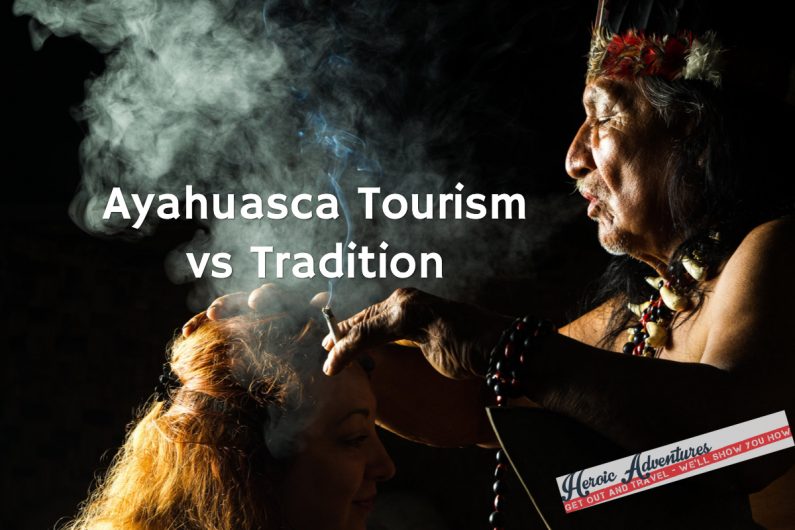
Ayahuasca Tourism vs Tradition [Video]

Ayahuasca Tourism vs Tradition: Clashes in Culture

Notes on Ayahuasca Tourism vs Tradition: The Clash Between Western Psychonauts & Traditional Practitioners(Jerónimo M. Muñoz)

From the 3rd Amazonian Shamanism Conference, Iquitos, Peru — 2007

The 45+ minute talk is a critique of what some call ‘New Age Plastic Shamans‘, and the interaction of different cultures and how they influence each other — taking focus is the interaction of gringo tourist seeking authentic shamans — the somewhat misguided imagination many gringos have of what a true medicine man should be: the idealized buddha-like delusions many seekers believe-in are highlighted.

Jerónimo M. Muñoz begins the talk about his journey making a documentary film focused on entheogens:

  • Touching mainly on culture and not being guilty of the seemingly corrupting influence of encounters with the other. 
  • Some may call it progress, others cultural destruction — but no matter how you look at the forces Muñoz brings attention to here, we are left with only a deeper awareness of a complex issue that must be addressed by each person individually.
  • Not to mention, knowing about the socio-cultural issues surrounding commercialized representations of traditional medicine will help any seeker venturing to experience ayahuasca in the modern world to be prepared to deal with the realities that are more than not quite different than the romantic notions many people would hope to encounter in an beyond human spiritual adept, shaman.
  • Great comparison to a German and cowboys…

First, Muñoz began his filmmaking about entheogens in Mexico in the village where Maria Sabina was from — Maria was a Mazatec shaman women who was found by R. Gordon Wasson(former J.P. Morgan banker) who found her while he was searching for a mushroom cult. He wrote an article in Life magazine called ‘The Magic Mushroom’. Due to this article, Timothy Leary encountered mushrooms in Mexico inspired from the article in Life magazine.

Mr. Muñoz, a Spanish filmmaker with a deep interest in entheogens, follows in Wasson’s footstep and becomes down due to the commercialization and change in ambiance due to what he seems to associate with the fame of Maria Sabina.

He even visited her family and discovers how the influx of visitors destabilized the village of Maria Sabina….

Then Muñoz takes ololiuqui (a species of morning glory that has LSD-like properties) and has a terrible night and realized how far out he was and felt stupid…and how one’s interest can turn destructive.

“This general interest can be very destructive of certain places…even the arrival of money…it destabilizes the place…it creates frictions…it creates envy…it was good intentions all around…”

Talk is about gringos not ayahuasca. Muñoz was forced to look at himself again and again and again — he had tunnel vision and seeking the substances, or plants, and not paying attention to the rest of the life, the culture.

Once he left the study of entheogens, he started to read anthropology but this was more the perspective of the gringo then it led him to colonialism…

Insidious process that is a slow eroding,we take more & more & more & more, we take the resources then their souls…

Take away, argumenttoday colonialism continues but today it is a cultural colonialism— it’s just a process that continues regardless of the fact that we are good but our very presence is an imposition. Some would argue that the phenomena of the ayahuasca retreat in South America is a continuation of this process.

“I want to talk a little bit about this process…the pastoral idea the idea that somewhere else people live in complete harmony with nature — even the Greeks believed this 3,000 years ago and somehow we lost contact with nature.

The idea of idealizing native people is not true — they are human beings, idealizing them is saying, ‘they are not like us’ but they are… they are a person.

This idea is very powerful. They are people, living in a particularly fucked-up situation in the world.”

People were disappointed who went deep in the jungle and thought they were ripped-off. They were seeking an old wise-man, a buddha, an ideal that doesn’t exist and they were very disappointed and they feel let down, ripped off (Similar to the myth of the cowboy in the West).

“I’d been a fucking idiot with a head full of bullshit ideas that weren’t true— and it’s totally disrespectful…”

The problem is we feel empty and we want to fill the lack… “I will play the indian that I want the indians to be”.

Take a picture… trying to grab things that can’t be grabbed and we end up with empty forms… (being a basketball player is not in your sneakers).

  • Learn the icaros, all we’re grabbing is empty forms…
  • What we’re discovering is how the rest of the world lives and goes to the doctor (traditional medicine).

“By looking at these things you destroy them”. “….please, please, please be very careful. If you’re gonna enter other peoples culture, try and walk on your tip toes. Try to be a fly on the wall. Try to shut your mouth and open your eyes. Try to be careful…we are German cowboys.”

——–

The above text are notes created while watching the above video lecture — Ayahuasca Tourism vs Tradition: The Clash Between Western Psychonauts & Traditional Practitioners (Jerónimo M. Muñoz)

———

Did you know that ayahuasca can be effective for detox, including THC detox?

5 Amazing Islands You Can Afford to Rent on Your Holiday Vacation

Islands you can rent for your holiday vacations

You don't have to be a billionaire or be listed among Hollywood's rich and famous in order to enjoy a dream holiday on a private island.

Here's a list of islands you might want to consider leasing the next time you plan your vacation.

1. Porer Island in Croatia

Porer Island, Croatia

At around $527 per person weekly, Porer Island is a half-acre islet that sits 2.5 kilometers away from the Croatian coast. 

At Porer Island, your holiday getaway in the Adriatic Sea will involve watching Porer's magnificent sunsets and boat trips (that should all be arranged beforehand) to the small islands in the vicinity.

This private island rental has a 35-metre-tall lighthouse tower.

Its main accommodation for guests is the modest stone edifice at the base of the lighthouse tower.

2. Robert's Caye in Belize

Situated 10 miles from the coast of the mainland, this one-acre private island is a steal at an estimated $150 per person.

Robert's Caye is an offshore island in the Caribbean Sea. It is part of Robert's Grove Resort located in the mainland's sandy beaches.

There are a few sparsely outfitted yet fully functioning rooms at Robert's Caye, a setup that is all too perfect for a castaway-from-modern-civilization lifestyle.

You might be staying with a caretaker and some other guests, depending on the time of the year.

3. Coco Plum Caye in Belize

Coco Plum Caye is another affordable private island for your dream holiday destination in Belize. 

Situated eight miles from the coast of the mainland, Coco Plum Caye offers attractions like breathtaking views, as well as unforgettable diving and kayaking experiences, for an estimated weekly starting rate of $1,550 per person.

Just like in Robert's Caye, everything at Coco Plum Caye is managed at a casual, fun, and relaxing pace.

For example, there is no uniformed staff to wait out on you as you drink local beer and rum while lazing away on the hammocks.

There are ten romantic oceanfront cabanas for guest accommodations.

Watching sundown on one of the private island's lounge chairs, you can mingle with the guests occupying the other cabanas.

4. Dunbar Rock in the Honduras

The notorious pirate Blackbeard once inhabited Dunbar Rock, which now sports one of the most stunning villas in Honduras

At a weekly rate of around $1,200 per person, you get to enjoy a concierge-assisted diving and reef exploration, your very own white sandy beach, on-call masseur, and a pool bar for happy hour.

Numerous other pampering options are on hand for guests in Dunbar Rock, starting from being warmly welcomed upon arrival at the GuanajaAirport and the ensuing boat ride to the caye.

Related: Pirates of the Seychelles

5. Utter Inn in Sweden

This fascinating holiday destination is for the adventurous and definitely not for the claustrophobic.

Utter Inn is a uniquely charming floating house, which doubles as a private island outfitted with underwater rustic lodging. 

It sets you back an estimated $1,800 per week.

Climb the narrow stairs to reach the structure's above-water area.

The bedroom is built underwater, and you get to see fish on the glass portholes.

There is a small dining area, a latrine, and a battery-run hotplate in the makeshift kitchen.

Wrapping Up: Rent an Island for Your Holiday

The aforementioned five private islands won't necessarily break the bank for most people.

Look at quotes from various sites and make your reservation months ahead.

Also, don't forget to note peak holiday seasons because rates may be higher during those times.

10 Extreme Destinations for the Most Adventurous Travellers

Extreme Destinations for the Most Adventurous Travellers

In the broadest definition, there are two types of traveller.

First, there is by far the most common kind, that being the type who wants to experience the world with some semblance of comfort and safety and without having to spend a fortune as well as months of preparation.

The second type concerns the world’s most adventurous type, that being the person who thrives on pushing themselves to the absolute limits to do something utterly crazy if only just to be one of the few on the planet who can make such a claim. This list is for the latter.

1. Oymyakon, Russia

Oymyakon, Russia

There’s bitter, frostbite-inducing cold, and then there’s cold that’s so intense that a cup of coffee turns to snow if it’s thrown off a balcony.

Welcome to Oymyakon, Russia, the coldest permanently inhabited place on Earth, and a place where diesel spends half of the year frozen solid.

The remote Siberian town of 500 people is built entirely on permafrost and surrounded by a tundra where the mercury regularly plummets below -50 °C during the winter months.

Appropriately, the Soviet-Era entry sign to the town reads ‘Oymyakon, The Pole of Cold’.

2. Lut Desert, Iran

Lut Desert, Iran

If you feel the need to warm up a little after a visit to Pole of Cold, the Lut Desert shouldn’t disappoint.

The 20,000-square-mile salt desert in Iran is one of the driest and hottest places on the planet, with surface temperatures reaching a balmy 70 °C. In 2016, the Lut Desert was added to the UNESCO World Heritage List owing to its unique geography, climate and bizarre sand formations.

Beautifully post-apocalyptic in its appearance, the Lut Desert is characterised by countless towers of mud and sand, eroded over the eons by the wind.

3. Atacama Desert, Chile

Atacama Desert

The driest place in Earth, some parts of the Atacama Desert, which is mostly located in Chile, haven’t seen rain since records began.

Much of the region is almost entirely lifeless, looking more like the surface of Mars than anywhere else here on Earth.

In fact, that’s precisely the reason why it’s long been one of the world’s favourite places for filming movie scenes set on the Red Planet.

With nary a cloud in the sky, the Atacama Desert is also a paradise for skywatchers seeking the world’s best views of the heavens, completely devoid of any light pollution.

4. Tristan da Cunha, South Atlantic

Tristan da Cunha Rockhopper Penguin a.k.a. Pinnamins

Some people just want to get away from it all, so what better option than the remote island of Tristan da Cunha, located in the middle of the South Atlantic.

The island is some 1,200 miles away from the nearest inhabited area, Saint Helena, which itself is one of the most remote settlements on the planet.

The population of 265 lives entirely in the village of Edinburgh of the Seven Seas relying largely on the local crawfish industry and the sale of postage stamps. There are more rockhopper penguins, known locally as pinnamins (image above), that are residents Tristan da Cunha than people.

The only way to get there is by fishing boat, a handful of times per year from South Africa.

5. La Rinconada, Peru

The highest permanent settlement in the world is, sadly, also a thoroughly dreary place of abject misery.

Its population of some 50,000 relies entirely on the local gold-mining industry where they work for free every day of the month except for one, when they’re allowed to take home anything they find.

In addition to what most of the civilised world would describe as corporate slave labour, the residents of the town have to make do without any plumbing or sanitation.

Making matters even worse is the fact that breathing at a height of 16,700 feet is hardly easy.

6. Coober Pedy, Australia

Coober Pedy Australia

Coober Pedy, a remote town of some 1,700 inhabitants, is the world’s biggest supplier of opals.

However, while daily temperatures regularly exceed 40 °C throughout the year to make this a rather inhospitable place, the ever-resourceful Australians have found a novel way to live with the harsh climate – to build underground.

Much of the population lives, shops and even worships under the Earth, and there’s a subterranean hotel, bookstore, church and more where temperatures consistently hover around a rather more pleasant 22 °C.

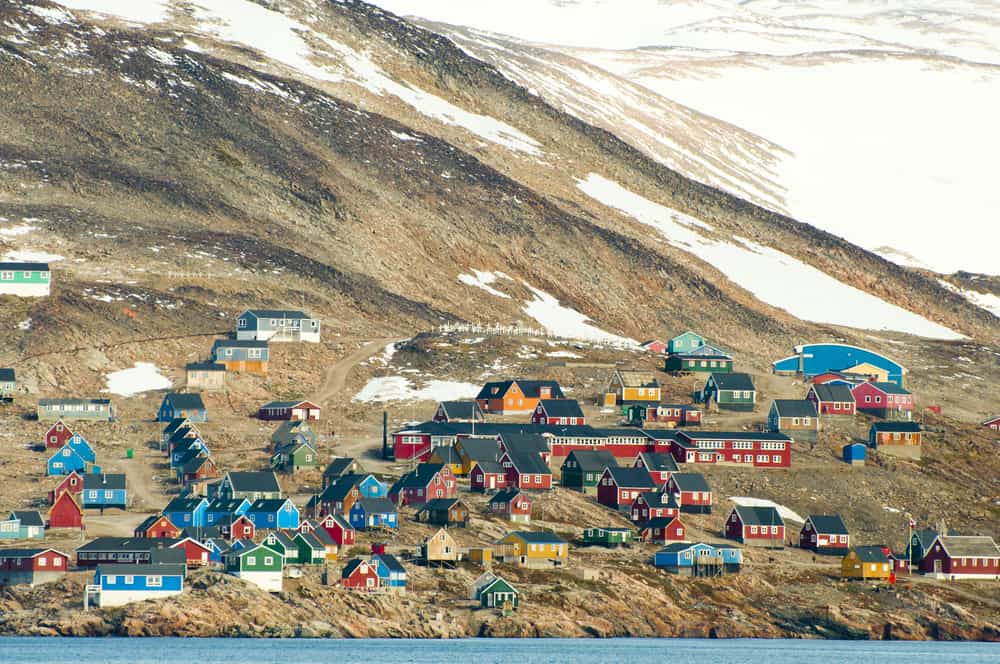
7. Ittoqqortoormiit, Greenland

Ittoqqortoormiit, Greenland

With only 56,500 inhabitants, Greenland is by far the least densely population country in the world, so its remotest town, Ittoqqortoormiit, is quite literally in the middle of nowhere.

Far above the Arctic Circle, this small town of 500 people is a place where the sun never rises above the horizon in winter.

The mercury rarely goes above 6 °C, even in summer, and the place is not exactly easy to get to either.

Nonetheless, it offers a truly unique experience to visitors who can enjoy their time dog-sledding and kayaking in one of the world’s most unspoiled destinations.

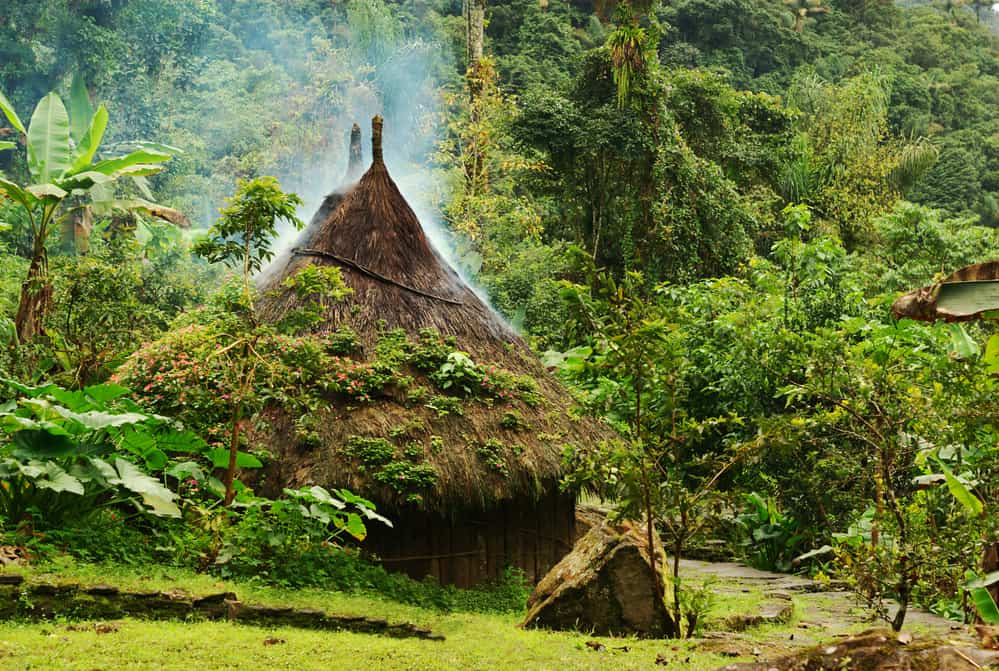
8. Lloró, Colombia

Lloró, Colombia

Don’t forget to bring your umbrella if you decide to visit the village of Lloró in Columbia.

The British might be infamous for complaining about the weather, but they’ve got nothing on this place, which receives an average annual rainfall of almost 300 inches. That’s 40 feet of rain per year, compared to 2 feet in London.

In the wettest place in the world, temperatures average 25-30 °C throughout the year, and there’s almost never a day without rain.

However, the surrounding area is abundant with lush jungle, making it a haven for exotic plants and animals.

9. Krubera Cave, Abkhazia

Those seeking a caving adventure may find it worthwhile to pay a visit to Georgia’s breakaway republic of Abkhazia.

Though the troubled region is not easy to get to, it is home to the deepest cave in the world, located high in the mountains.

The limestone cave is around 7,200 feet deep and over eight miles long, and much of it still remains unexplored due to its very narrow passages.

Even more impressively, the unique environment has given rise to some equally unique animals, including several endemic species of spider, crustaceans and beetles.

10. Outer Space

There are some adventurers for whom Earthly delights simply don’t cut the mustard.

Fortunately, there’s an infinity to discover beyond and, slowly but surely, tourism to outer space is becoming a reality.

It will still cost you a fortune, with ticket prices for a brief Virgin Galactic trip, albeit one where you can experience a microgravity environment, costing $200,000.

However, now that many private companies are investing heavily in space tourism, it seems almost certain that, in the next couple of decades, it will no longer be a luxury exclusive to the world’s millionaires.

Blue Origin, Virgin Galactic and Space X… time will tell when you and with who you can push the edge to the final frontier.

Wrapping Up: Extreme Destinations

The exciting world of adventure travel presents literally limitless exciting possibilities, and the above represent just a few of the most extreme.

None of them are particularly hospitable, but for the most daring, they certainly promise to be among the most memorable.

10 Amazing South Korean Travel Destinations Outside Seoul

Sout Korean Travel

Most visitors to South Korea spend their entire stay in the Korean capital city, Seoul.

Seoul is a one of the world’s largest cities and has an incredible selection of historic buildings, museums, galleries, restaurants and nightlife options to choose from.

However, tourists who spend their entire trip in Seoul will miss out on some even more incredible attractions offered by other cities in South Korea.

Here are 10 incredible destinations that any traveler in South Korea should consider visiting.

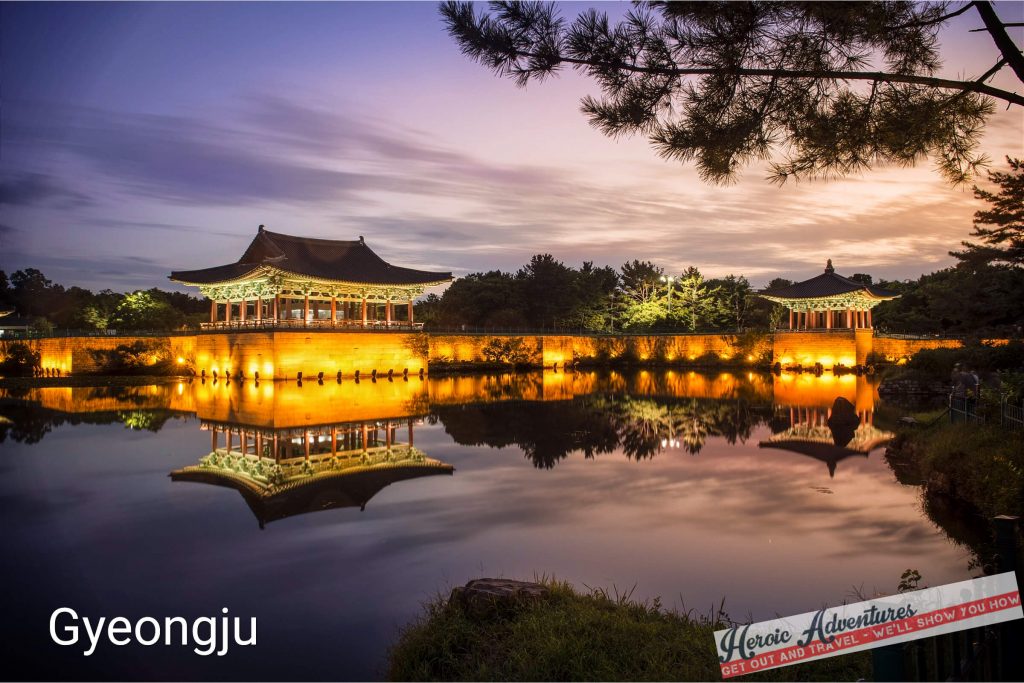
1. Gyeongju

Gyeongju South Korea

Tourists from within Korea and neighboring countries know Gyeongju as the home of some of South Korea’s most mind-blowing historical sites, but tourists from further afield have often never heard of it.

Located in the south-east corner of Korea, making it an easy day trip from the much larger coastal city of Busan, Gyeongju is the former capital of the ancient kingdom of Silla.

Until roughly 1000 years ago, Korea was divided into three separate kingdoms, with Silla being the most prosperous.

The most impressive traces of this kingdom that you can see in Gyeongju are fields filled with huge burial mounds and a museum displaying the contents of these mounds, with Gyeongju’s kings being buried with enough gold to make an Egyptian pharaoh jealous.

Gyeongju also hosts some incredible temples, including a cave high in the mountains with a huge statue of Buddha which was been there since the 8th Century.

2. Jeju Island

Jeju City Sout Korea Hiking

Jeju is a volcanic island off the southern coast of South Korea which boasts of Korea’s most beautiful natural scenery.

The dormant volcano Mount Hallasan dominates the island–and visitors can hike–don’t forget your hiking poles if you do, almost 2000 meters to its summits to enjoy incredible views across Jeju and the ocean around it.

Jeju island also has some of South Korea’s most beautiful beaches and a laid-back local culture that will refresh anyone feeling overwhelmed by the relentless pace of life in Seoul.

It’s also one of the best places to enjoy delicious fresh seafood in South Korea, as well as Jeju’s signature fruit, Jeju oranges.

3. Busan

Look down from mountain at Busan

Busan is South Korea’s second biggest city, and as mentioned above, its closely situated to the historical city of Gyeongju, making it easy to combine a visit to both cities.

It’s also South Korea’s closest major city to Japan, making it an ideal spot to take a cheap flight to Osaka or Tokyo if you’re visiting South Korea as part of a larger trip around Asia.

Busan is more than just a travel hub, however. In summer, it earns the nickname ‘Seoul on sea’ as residents of the South Korean capital flock to Busan’s beautiful beaches and booming nightlife.

Whether you want to relax by the ocean during the day or party long into the night, or both, Busan is an energetic city with plenty to offer everyone.

4. Jeonju

Jeongju hanok village

Jeonju is home to one of South Korea’s biggest traditional housing areas, known as a hanok village.

It also boasts some stunning Buddhist temples and is one of the best areas to experience traditional Korean culture.

Beyond the beauty of the old hanok village, Jeonju is home to some of South Korea’s most delicious food.

Jeonju is situated in Jeolla-do, a south-western province known as ‘the breadbasket of Korea.’

Jeonju is the birthplace of bibimbap, a dish of mixed rice, egg, vegetables, beef and hot sauce that has become somewhat popular in western countries in recent years.

It also has an area dedicated to restaurants serving the Korean rice wine makgeolli, along with a plethora of delicious side dishes.

5. Chuncheon

Chuncheon bridge and water statue in foreground

Chuncheon is conveniently located close enough to Seoul that it can reached on the South Korean capital’s subway network.

A stunning area of natural beauty, Chuncheon encompasses rivers, mountains, forests and islands, and enthralls visitors with some of the most beautifully situated Buddhist temples in South Korea.

It is also the spiritual home of the spicy chicken dish, dakgalbi, with many restaurants offering the popular local variety of one of Korean cuisine’s tastiest offerings.

6. Suncheon

Suncheon Folk Village South Korea

Another area of natural beauty, Suncheon is in the far south of Korea.

Its protected wetlands offer a chance to see some of the rarest birds in South Korea, along with stunning views across Suncheon bay to the ocean.

An eco-museum explains the area’s environment to visitors, and boat trips and wooden platforms offer a chance to get close to Suncheon’s unique wildlife.

7. Panmunjom

Panmunjom DMZ South Korean Border with North Korea

Panmunjom is considered a must-see on any visit to South Korea.

Although it lies a few hours north of Seoul, there are a ton of tour companies offering day trips from South Korea’s capital.

Panmunjom is the area that incorporates the demilitarized zone (DMZ) which separates North and South Korea.

Visitors can learn about the tragic history which divided the South Korean peninsula, as well as experiencing the strange sensation of peering into the mysterious country of North Korea.

There are even meeting rooms set up across the border where visitors can technically cross over onto North Korean soil.

8. Tongyeong

Tongyeong Coastline South Korea

Tongyeong is a southern coastal city which is often referred to as ‘the Naples of South Korea.’

It’s a beautiful city of winding hill paths and gorgeous ocean views, but what really makes Tongyeong a unique travel destination is its history.

You may have heard of Lee Sun Shin, the Korean admiral who invented an armored vessel commonly known as a turtle ship due to its hard outer shell.

These ships were used to defeat the much larger Japanese navy in a famous battle in the 16th century.

Visitors to Tongyeong can visit the many small islands which Lee Sun Shin used as cover during this battle.

9. Gwangju

Gwangju

Gwangju is a south-western city which, like the Jeonju, is located in Jeolla province, commonly regarded as offering the best food in the country.

Gwangju also has a tragic history, as it was the site where a student uprising against the authoritarian government in 1980 was brutally crushed by the Korean army.

This tragic event was an incredibly important point on the path to South Korea becoming a democracy, and elements of a rebellious counter-culture spirit are still present in Gwangju to this day.

10. Yangpyeong

Map Yangpyeong ski resort South Korea

Yangpyeong is another city which can be easily reached on the Seoul subway network.

Located to the south of the capital, Yangpyeong is one of South Korea’s best ski resorts.

Seoul residents flock to its slopes in the winter, which offer much cheaper skiing than similar resorts in Europe and North America.

While Seoul is by far Korea’s largest cities and home to a wider array of attractions than anywhere else, South Korea has a lot of amazing destinations to discover outside its capital.

Any visitor to South Korea should therefore make the effort to get out of the capital city and experience the other great destinations that Korea offers.

Outdoor Adventures: 3 Ways to Get in Hiking Shape

How to Get in Hiking Shape

For experienced outdoorsmen, there’s nothing quite like taking a relaxing hike on your favorite nature trail.

Depending on the time of year, hiking has many advantages. From beautiful natural scenery to physical exercise to socializing with other hikers, outdoor hiking offers a perfect escape from the stresses of the weekly work grind.

However, hiking is not necessarily the easiest of fitness hobbies.

To get into hiking shape, there are some particular steps you should take in addition to your weekly fitness workout.

Cardio for Hiking Shape

First, it is very important to include cardio conditioning in your training regime.

Specifically, make sure to fit in three to four sessions of 30-80 minutes of cardio into your weekly routine.

These sessions should be relatively low-impact cardio, such as taking a light jog or, even better, setting the treadmill at a sharp incline and walking at approximately four miles per hour. You can also begin taking shorter hikes in your area.

The purpose of low-impact cardio conditioning is to build endurance, rather than speed.

Most hiking sessions can take anywhere from two to eight hours; more advanced hikers will even enjoy day-long hikes. To ensure that you make it to the top of your chosen trail, begin conditioning your body for cardio endurance in advance.

Second, be sure to focus on building lower-body strength.

lower body strength for hiking

One mistake that beginning hikers make is to assume that because they can run for long-distances, or are cardio-fit, they are sufficiently prepared for a hike.

However, there is a significant difference between a flat running surface and a steeply inclined hiking trail, which may also include periods of walking up steps or rock climbing.

For this reason, it is necessary to include lower-body training sessions, focusing on the muscles that will propel you towards your hiking goal.

You may also like: Best Trekking & Hiking Poles: Ultimate Guide with Detailed Reviews

Include 30-40 minute weight-training sessions at least two times per week that emphasize your leg muscles, with a focus on quadriceps, hamstrings, and calf muscles.

If you prefer to avoid using machines, there are a number of functional body weight movements you can use, including weighted squats and weighted lunges.

Your calves are both typically underdeveloped and extremely important to your hiking success.

To improve them, you can try standing on the edge of a stair or other raised surface so that your heels are hanging off the edge and you are supporting yourself only with the ball of your foot and toes. Raise and lower your body 15 times for three sets to complete the exercise and feel those calves burn.

Third and finally, hikers sometimes have problems with mild injuries, such as rolled ankles or pulled muscles.

How to Flexibility Training for Hikers

These can be due to the unstable terrain of a hiking trail, or even just due to over-working the muscles.

One way to avoid these injuries is to add flexibility training to your workout. It is important to stretch in general after working out to reduce soreness and prevent injuries from stiff muscles.

To improve your hiking flexibility, focus on leg muscle and core stretches, such as a wide leg, sitting stretch or a toe-touch stretch. For ankle flexibility, lie flat on your back, extend one leg, and use your foot to “write” the letters of the alphabet in the air. Repeat the stretch with your other leg.

Wrapping Up

By working on your cardio endurance, lower body strength, and flexibility, you can ensure that your hiking experience is both fun and relaxing.

In addition to improving your hiking abilities, these training methods have the added benefit of improving general health, not to mention the mental benefits of hiking.

By getting started on these steps at the gym or at home, you will be able to reach the top of your favorite nature trail in no time at all.