Chris
ChrisAuthor Archives: Chris
 Chris
ChrisAuthor Archives: Chris

Most visitors to South Korea spend their entire stay in the Korean capital city, Seoul.
Seoul is a one of the world’s largest cities and has an incredible selection of historic buildings, museums, galleries, restaurants and nightlife options to choose from.
However, tourists who spend their entire trip in Seoul will miss out on some even more incredible attractions offered by other cities in South Korea.
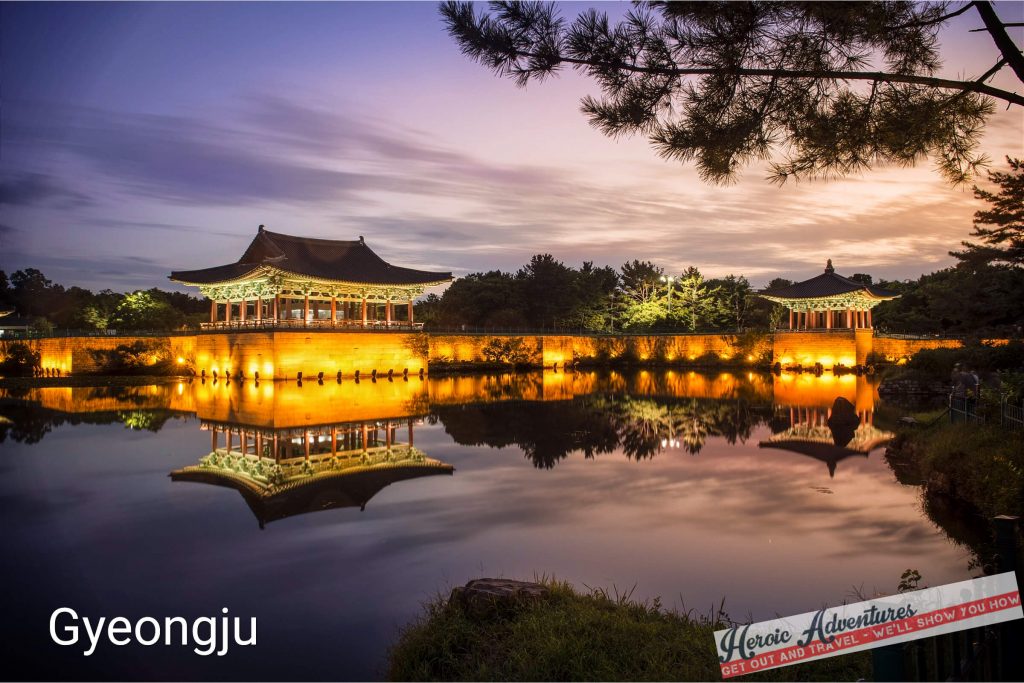
Tourists from within Korea and neighboring countries know Gyeongju as the home of some of South Korea’s most mind-blowing historical sites, but tourists from further afield have often never heard of it.
Located in the south-east corner of Korea, making it an easy day trip from the much larger coastal city of Busan, Gyeongju is the former capital of the ancient kingdom of Silla.
Until roughly 1000 years ago, Korea was divided into three separate kingdoms, with Silla being the most prosperous.
The most impressive traces of this kingdom that you can see in Gyeongju are fields filled with huge burial mounds and a museum displaying the contents of these mounds, with Gyeongju’s kings being buried with enough gold to make an Egyptian pharaoh jealous.
Gyeongju also hosts some incredible temples, including a cave high in the mountains with a huge statue of Buddha which was been there since the 8th Century.

Jeju is a volcanic island off the southern coast of South Korea which boasts of Korea’s most beautiful natural scenery.
The dormant volcano Mount Hallasan dominates the island–and visitors can hike–don’t forget your hiking poles if you do, almost 2000 meters to its summits to enjoy incredible views across Jeju and the ocean around it.
Jeju island also has some of South Korea’s most beautiful beaches and a laid-back local culture that will refresh anyone feeling overwhelmed by the relentless pace of life in Seoul.
It’s also one of the best places to enjoy delicious fresh seafood in South Korea, as well as Jeju’s signature fruit, Jeju oranges.

Busan is South Korea’s second biggest city, and as mentioned above, its closely situated to the historical city of Gyeongju, making it easy to combine a visit to both cities.
It’s also South Korea’s closest major city to Japan, making it an ideal spot to take a cheap flight to Osaka or Tokyo if you’re visiting South Korea as part of a larger trip around Asia.
Busan is more than just a travel hub, however. In summer, it earns the nickname ‘Seoul on sea’ as residents of the South Korean capital flock to Busan’s beautiful beaches and booming nightlife.
Whether you want to relax by the ocean during the day or party long into the night, or both, Busan is an energetic city with plenty to offer everyone.

Jeonju is home to one of South Korea’s biggest traditional housing areas, known as a hanok village.
It also boasts some stunning Buddhist temples and is one of the best areas to experience traditional Korean culture.
Beyond the beauty of the old hanok village, Jeonju is home to some of South Korea’s most delicious food.
Jeonju is situated in Jeolla-do, a south-western province known as ‘the breadbasket of Korea.’
Jeonju is the birthplace of bibimbap, a dish of mixed rice, egg, vegetables, beef and hot sauce that has become somewhat popular in western countries in recent years.
It also has an area dedicated to restaurants serving the Korean rice wine makgeolli, along with a plethora of delicious side dishes.

Chuncheon is conveniently located close enough to Seoul that it can reached on the South Korean capital’s subway network.
A stunning area of natural beauty, Chuncheon encompasses rivers, mountains, forests and islands, and enthralls visitors with some of the most beautifully situated Buddhist temples in South Korea.
It is also the spiritual home of the spicy chicken dish, dakgalbi, with many restaurants offering the popular local variety of one of Korean cuisine’s tastiest offerings.

Another area of natural beauty, Suncheon is in the far south of Korea.
Its protected wetlands offer a chance to see some of the rarest birds in South Korea, along with stunning views across Suncheon bay to the ocean.
An eco-museum explains the area’s environment to visitors, and boat trips and wooden platforms offer a chance to get close to Suncheon’s unique wildlife.

Panmunjom is considered a must-see on any visit to South Korea.
Although it lies a few hours north of Seoul, there are a ton of tour companies offering day trips from South Korea’s capital.
Panmunjom is the area that incorporates the demilitarized zone (DMZ) which separates North and South Korea.
Visitors can learn about the tragic history which divided the South Korean peninsula, as well as experiencing the strange sensation of peering into the mysterious country of North Korea.
There are even meeting rooms set up across the border where visitors can technically cross over onto North Korean soil.

Tongyeong is a southern coastal city which is often referred to as ‘the Naples of South Korea.’
It’s a beautiful city of winding hill paths and gorgeous ocean views, but what really makes Tongyeong a unique travel destination is its history.
You may have heard of Lee Sun Shin, the Korean admiral who invented an armored vessel commonly known as a turtle ship due to its hard outer shell.
These ships were used to defeat the much larger Japanese navy in a famous battle in the 16th century.
Visitors to Tongyeong can visit the many small islands which Lee Sun Shin used as cover during this battle.

Gwangju is a south-western city which, like the Jeonju, is located in Jeolla province, commonly regarded as offering the best food in the country.
Gwangju also has a tragic history, as it was the site where a student uprising against the authoritarian government in 1980 was brutally crushed by the Korean army.
This tragic event was an incredibly important point on the path to South Korea becoming a democracy, and elements of a rebellious counter-culture spirit are still present in Gwangju to this day.

Yangpyeong is another city which can be easily reached on the Seoul subway network.
Located to the south of the capital, Yangpyeong is one of South Korea’s best ski resorts.
Seoul residents flock to its slopes in the winter, which offer much cheaper skiing than similar resorts in Europe and North America.
—
While Seoul is by far Korea’s largest cities and home to a wider array of attractions than anywhere else, South Korea has a lot of amazing destinations to discover outside its capital.
Any visitor to South Korea should therefore make the effort to get out of the capital city and experience the other great destinations that Korea offers.

For experienced outdoorsmen, there’s nothing quite like taking a relaxing hike on your favorite nature trail.
Depending on the time of year, hiking has many advantages. From beautiful natural scenery to physical exercise to socializing with other hikers, outdoor hiking offers a perfect escape from the stresses of the weekly work grind.
However, hiking is not necessarily the easiest of fitness hobbies.

Specifically, make sure to fit in three to four sessions of 30-80 minutes of cardio into your weekly routine.
These sessions should be relatively low-impact cardio, such as taking a light jog or, even better, setting the treadmill at a sharp incline and walking at approximately four miles per hour. You can also begin taking shorter hikes in your area.
The purpose of low-impact cardio conditioning is to build endurance, rather than speed.
Most hiking sessions can take anywhere from two to eight hours; more advanced hikers will even enjoy day-long hikes. To ensure that you make it to the top of your chosen trail, begin conditioning your body for cardio endurance in advance.

One mistake that beginning hikers make is to assume that because they can run for long-distances, or are cardio-fit, they are sufficiently prepared for a hike.
However, there is a significant difference between a flat running surface and a steeply inclined hiking trail, which may also include periods of walking up steps or rock climbing.
For this reason, it is necessary to include lower-body training sessions, focusing on the muscles that will propel you towards your hiking goal.
You may also like: Best Trekking & Hiking Poles: Ultimate Guide with Detailed Reviews
Include 30-40 minute weight-training sessions at least two times per week that emphasize your leg muscles, with a focus on quadriceps, hamstrings, and calf muscles.
If you prefer to avoid using machines, there are a number of functional body weight movements you can use, including weighted squats and weighted lunges.
Your calves are both typically underdeveloped and extremely important to your hiking success.
To improve them, you can try standing on the edge of a stair or other raised surface so that your heels are hanging off the edge and you are supporting yourself only with the ball of your foot and toes. Raise and lower your body 15 times for three sets to complete the exercise and feel those calves burn.

These can be due to the unstable terrain of a hiking trail, or even just due to over-working the muscles.
One way to avoid these injuries is to add flexibility training to your workout. It is important to stretch in general after working out to reduce soreness and prevent injuries from stiff muscles.
To improve your hiking flexibility, focus on leg muscle and core stretches, such as a wide leg, sitting stretch or a toe-touch stretch. For ankle flexibility, lie flat on your back, extend one leg, and use your foot to “write” the letters of the alphabet in the air. Repeat the stretch with your other leg.
By working on your cardio endurance, lower body strength, and flexibility, you can ensure that your hiking experience is both fun and relaxing.
In addition to improving your hiking abilities, these training methods have the added benefit of improving general health, not to mention the mental benefits of hiking.
By getting started on these steps at the gym or at home, you will be able to reach the top of your favorite nature trail in no time at all.

Remote working was virtually unheard of only a few decades ago. Having a full-time job usually meant working in the same place every day, with a fixed schedule and the same group of colleagues.
With the internet having become more widespread, it is now much easier for people to work remotely.
Over the past few years, a whole movement based on working remotely while traveling the globe has emerged. “Digital nomads,” as they are commonly known, typically have jobs which allow them to be fully remote, such as translation, computer programming or writing.

You can base yourself anywhere that’s equipped with electricity and a reliable internet connection. There are even websites that rate top digital nomad destinations, for example Nomadlist, you can see it here.
Looking for something more fantastic, if you’ve always wanted to live by the ocean, or in the shadow of a mountain, now you can.
There’s no need to live in an overcrowded, polluted city just because that’s where all the jobs are.

Also read: Top 5 Cities to Live as a Digital Nomad
Some digital nomads are lucky enough to be able to set their own schedules and work whenever it suits them.
Others need to work fixed hours, especially if they need to be available to take calls or participate in video conferences.
However, even if you fall into the second group, you can make the time difference work for you.
When you’re a night owl, try living somewhere which is 10-plus hours ahead or behind your home country, so that you can work until the early hours while still being able to take calls and contact your team.
When we asked Richard McGirr the founder of Visichain.io, a Hong Kong based Digital Transformation consultancy that specializes in supply chain and procurement digitization, his views on employing digital nomads, he said:
“Our company utilizes a few digital nomads some based in Eastern Europe, and a few in the Philippines, while we also tend to hire the best contractors for specific projects no matter where they are….the top reasons we hire both task based and full time digital nomads are to 1) leverage time shifts, so we can service our clients 24/7; 2) leverage lower cost countries with equivalent or better cost for value; and, 3) loyalty, our remote workers that have flexibility in their location tend to stay with us longer”

Also read: Travel + Work: Synching Across Multiple Time Zones (When on the Road)
One of the biggest problems you might have at work is dealing with annoying colleagues, whether they won’t stop talking when you’re trying to concentrate, or they have a taste for stinky egg sandwiches which they eat at their desk.
Working remotely usually means working alone, from the comfort and privacy of your own home.
If you do get lonely, you can always use a co-working space to meet other digital nomads; unlike traditional working environments, it’s totally up to you.

Also read: Outsourced Ecommerce Fulfillment Allows for Location Independence, Run a Biz While YOU Travel
As the name implies, digital nomads are free to move around as much as they want to.
Many stay put in one place for several months, or even years, but others choose to relocate more often.
As soon as you feel the need for a change of scenery, you can book your next flight and go.
Lots of nomads even travel with carry-on luggage only, to make it even cheaper and easier to work while on the move.

Also read: Getting Ready For the Backpacking Season
People with regular 9-to-5 jobs usually have to commute. That means a lot of wasted time, whether they’re waiting for delayed trains or crawling along the freeway in rush-hour traffic.
When you’re a digital nomad, going to work can be as easy as walking downstairs and setting up your laptop on the kitchen table, which can save many of you up to two or three hours per day.
You can use that extra time to catch up with friends, pick up some new skills–like hiking or Mandarin–or just wake up later in the morning.

Also read: Essentials for a Safe, Enjoyable Hiking Trip
The digital nomad lifestyle is definitely not for everyone; it wouldn’t suit those who have time-management issues or need to be close to family and friends.
However, it can be an eye-opening experience for those who struggle to fit into traditional workplaces or who want to see more of the world without being limited to a few weeks of vacation time per year.
Why not give it a try?


Extreme camping certainly isn’t for everyone, but this type of camping is becoming more common among those who love experiences that test their strength and endurance.
They thrive on that feeling of pure ecstasy. Imagine yourself spending the night in pitch black, sleeping in a hammock high in the treetops.
How about setting up camp on a sheer cliff far above the ground?
Tree camping is gaining popularity in places around the world. Within the United States, one well-known spot is in The Willamette National Forest in Oregon near Blue River with the Pacific Tree Climbing Institute.
Get ready for the thrill of a life-time. The “campsites” are at least 200 feet up a 500 year- old Douglas Fir.
Guides will outfit you with all needed equipment. This extreme experience will cost you about $600 per person.
You will be issued harnesses and helmets. Now the work begins. It’s time to pull yourself up with attached ropes and cables to your campsite. If you get queasy with heights, don’t look down!
When you reach your destination, you will no doubt be exhausted. Your ‘tree boat” should be ready for you to climb in. This device is a sturdy hammock attached between the tree trunk and a large branch. As you dangle high above the ground, enjoy the gorgeous view.
Soon daylight will be gone and it will be pitch black. Fatigue from the climb as well as the swaying of your hammock, should put you right to sleep.
Morning arrives and you are wondering what you’re doing up in a tree. Room service responds by bringing a cup of hot coffee and a warm face wash.
Your extreme tree camping is over and preparation for the descent is next. You may be contemplating whether this is a once in a lifetime event or an annual event.
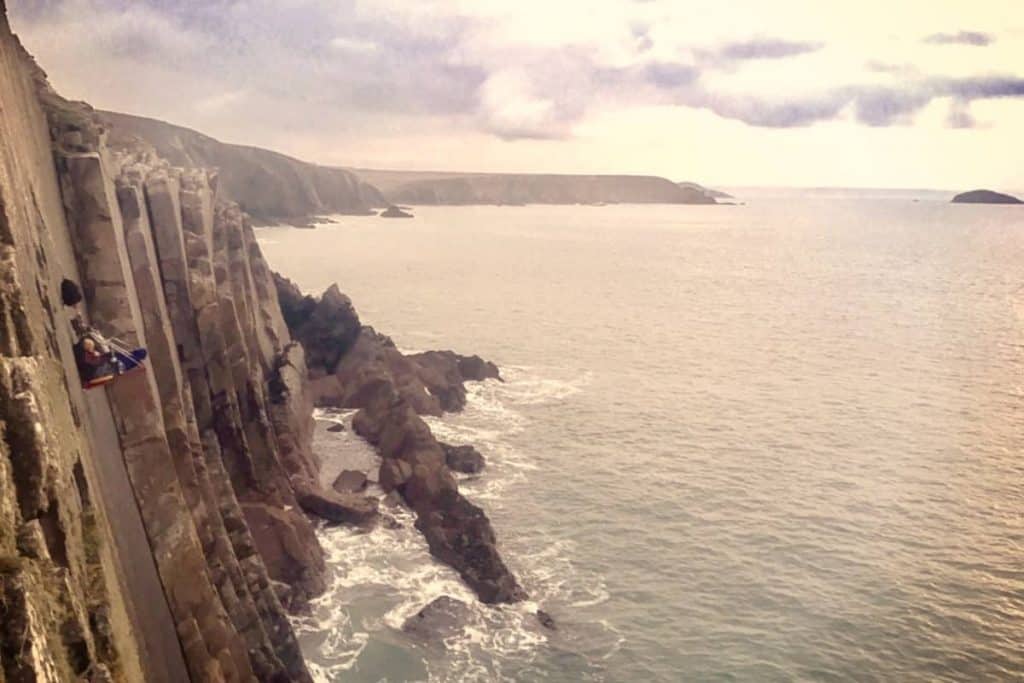
If you get an adrenaline rush thinking about “hanging out” against a sheer cliff at a dizzying height, extreme cliff camping may be just what you’re looking for.
For a number of years, rock climbers have used ledges and hanging tents to sleep and eat on climbs of more than one day. Now it’s becoming a popular extreme experience to climb a sheer cliff and set up camp for the fabulous views and just for the thrill of it all.
For ordinary ground-level campers, it’s enough of a challenge to securely set up a tent on the ground, but imagine attaching a portaledge (tent structure) to a sheer cliff many feet up.
The portaledge tents of the 1950s were fairly rustic and not too comfortable. More modern styles today have a stable ground support with a metal frame attached to straps that hang from the campsite at one single place.
The campers have a feeling of security and can comfortably relax and sleep after their tiring climbs. You can use single or double tents. With these stable tents you can move around a bit – do some cooking, read, play games and enjoy other life pleasures.
What is the big draw of this kind of outdoor experience? Some extreme campers explain that cliff camping gets the adrenaline going so strong that you feel like you’re literally “on the edge” of living life to the utmost.
More and more people, who have only dreamed of experiencing life on the edge and up high, are living out their dream as extreme camping is becoming more common in places around the world.
Equipment is becoming safer and more comfortable.
The adrenaline rush is on for the extreme risk-takers of the world.
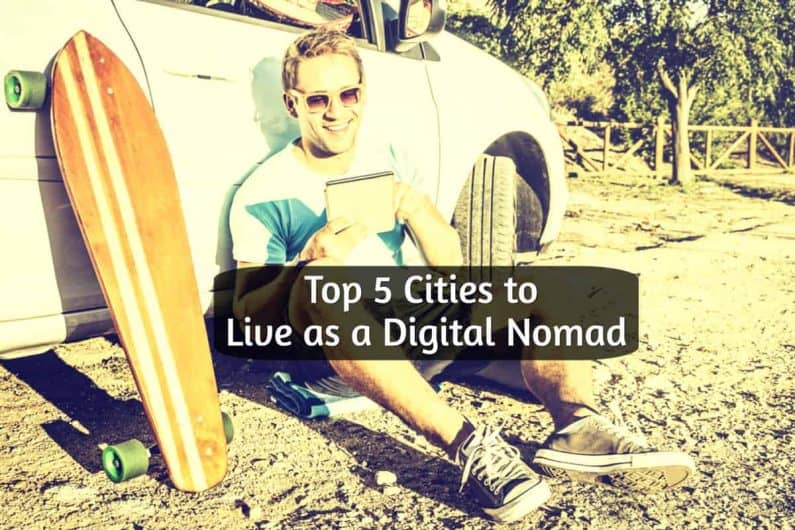
As the internet has given people the ability to work remotely, some have abandoned the old lifestyle of being tied to a place and 9-to-5 job.
Digital nomads travel the world, working from places as diverse and bohemian as an internet cafe in Prague or a beach in Bali.
Their geographically independent lifestyle lets them choose the cities with the lowest living costs, best climate or best local food.
Whether you are a writer, teacher, web developer, engineer, programmer or designer, here are the best places in the world to live as a digital nomad:

Bali is an Indonesian island known for its beautiful beaches, breathtaking mountain views and diverse wildlife.
It’s hard to imagine a more exciting and exotic place to live. Whether you want to see a live volcano, go on a safari, explore a monkey forest or enjoy one of the most complex cuisines in the world, Bali has something to offer to everyone.
The affordable rent and great WiFi connection have made Bali an extremely popular place for digital nomads in the past years.
The cost of living in Bali is a mere $900 USD a month.

The capital of the Czech Republic, Prague is the fifth most visited city in Europe.
Prague is full of cultural attractions which survived the world wars, such as:
Not to mention many world-class museums, galleries and concert halls.
With good WiFi, a more than affordable cost of living, great public transportation, and an amazing nightlife, Prague is currently one of the upward trending destinations for digital nomads.
About $800 a month.

Phuket, the largest island in Thailand, is a veritable paradise of turquoise waters and white beaches.
You can explore beaches and lagoons, practice water sports, enjoy the mix of Chinese and colonial architecture or visit the Buddhist temple of Wat Chalong, the spiritual center of Phuket.
The living expenses for a digital nomad in Phuket amount to a mere $800 a month, including housing and eating out three times a day, as well as fast WiFi connection.

Hanoi, the capital of Vietnam and its second largest city, lies on the bank of the Red River.
With its busy streets, delicious street food, many bars and cafes and extremely low cost of living, Hanoi is attracting more digital nomads every year.
Hanoi also offers fast WiFi and several great coworking spaces, which are bustling with entrepreneurs and startups, making it easy to get inspired and start connections. The living expenses in Hanoi are around $700 a month.

Costa Rica is one of the most popular places in Latin America for digital nomads, especially for those who enjoy nature.
With its great beaches, natural parks and a myriad of natural attractions, Costa Rica is the ideal place to work remotely.
San Jose, the capital, is renowned for its great food and nightlife.
For those who enjoy activities such as yoga and surfing, Santa Teresa offers a more relaxed lifestyle.
The cost of living in Costa Rica is about $1,500 a month.
The internet has revolutionized the way people live and work, bringing with it more flexibility and freedom.
Increasing numbers of people are abandoning crowded offices and polluted cities to work from idyllic places in the world, where the food and beaches are exceptional and the costs of living are much lower than in most Western cities.
Not only can such a nomadic lifestyle be cheaper than living in the same place all the time, but it gives you the opportunity to experience new places and cultures, which can be a boost to your creativity.