 Chris
ChrisAuthor Archives: Chris
 Chris
ChrisAuthor Archives: Chris

Do you want to earn a living as a digital nomad, but don’t quite know where to start? Do you want to increase your income each year while building a list of dependable clients?
One of the best ways to enjoy a career as a digital nomad is to hone the in-demand skills clients are looking for.
When you’re a freelancer hoping for a long and prosperous career as a digital nomad, here are five essential skills that can significantly improve your hire rate.
If you have your own blog or have previously managed your own blog, your chances of being hired increase significantly.
Employers look for freelancers who have a way with words and can prove they know how to reach an online audience.
When you manage your own blog, you stand out from other on-demand workers with no content marketing experience.
We do live in the digital for the last decades, it’s about time you showed some of your digital savvy via a blog–think of it as a portfolio piece to prove that you are no newbie to the digital realm.

Speaking of marketing, nomads with digital marketing experience have a definite advantage over those with no online marketing experience.
From social media outreach to SMS marketing, today’s employer wants to work with a freelancer who isn’t new to the digital marketing space.
Training takes time; if you can hit the ground running, employers will tend to hire you over a candidate with no marketing expertise.
Areas of focus for digital marketing include:
There are many more skill in the marketing space, best would be to focus your skills in a few area while being conversant in many, check out the T-shaped marketer to choose a path that fits your personality.
Customer service is another skill that translates well to freelancing.
Whether you have previously worked as a barista or retail sales clerk, your customer service experience shows that you know how to work with the public.
Most employers won’t want to know the specifics of your customer service jobs, but they’ll be glad you have basic customer service skills like need assessment and sales.
A digital nomad with search engine optimization skills has a much greater chance of being hired over one with no SEO experience.
When you can prove to a potential employer you have the skills necessary to improve their search engine placement, you’ll go to the top of their candidate list.
Even better, if you have your one blog (see skill #1 above), then build some white hat links and rank it for something. Once that has been accomplished, you have a perfect example to show to an employer that you actually know what you are doing.

Email outreach is a crucial outreach tool in today’s increasingly noisy social media world.
Many employers are finding their social media reach is dwindling and are transferring some of their marketing budget to email outreach instead.
Once you have previously run successful email marketing campaigns, an employer knows they won’t have to start from scratch with your training.
Improving your opportunities as a digital nomad comes down to honing the skills employers are looking for.
You can’t expect your annual income to increase if you aren’t actively improving your skill sets.
Work on the five above-listed talents and you just might be able to land more clients while traveling the globe as a digital nomad.
Even better than picking up skills are your own, there has been a recent uptick apprenticeships, or learning under someone (or an organization) that has mastered the skills you desire to make a living from.
A few examples include Empire Flippers, Taylor Pearson’s GetApprentice and the TropicalMBA’s program.

Italians may have invented coffee and the French may have perfected it, but the Americans have streamlined the brewing process with the automatic drip machine.
The ingenious process of heating the water, pouring it over the coffee grounds and filtering it to create a delicious cup of coffee can be attributed to the US.
With an easy brewing process, it’s no wonder that the US leads the world in coffee importation and consumption. The US also leads the world in drip coffee maker sales.
There are three basic principals at work with all brewing methods – heat, time and grind.
With a drip coffee maker, the heat and grind do most of the work, saving on time.
All home drip coffee makers have a water reservoir somewhere, usually opening on the top of the maker. Using the ceramic or glass coffee pot as a measuring cup (see header image above), you fill the pot with water equal to the amount of coffee you would like. Pour the cold (and filtered, if you are a purist) water from the pot into the reservoir.
Next, you look for the filter basket and place a filter in it. There are two basic filter shapes, a cone and a bowl. Within each shape there are sizes and material variances as well.
Once the basket and filter are loaded, add fresh coffee grounds.
In a perfect world, you will use beans roasted within the last 48 hours and grind them just before placing into the filter. If you don’t live in a perfect world, buy just enough fresh roasted beans to last you until your next trip to the store and grind enough for one pot just before you begin brewing.
You can usually buy a blade grinder for $20 or so from discount and department stores. The least preferred grounds are those that are sold in gallon tubs, but even these will make a cup of coffee far superior to instant granules.
Place the filter and basket into the coffee maker and replace the carafe or pot under the drip hole.
Finally, press the ON or BREW button. This begins the internal machinery to begin heating the water by running it over hot, electric coils. The nearly boiling water is then sucked up through tubes and over the grounds held in place by the filter and basket.
Gravity pulls the water through the grounds and down into the coffee pot. Many coffee makers include a heating element under the carafe to keep the coffee warm. Be careful, though, this element can cause the coffee to get too hot and burn – a very unsavory cup indeed.

Walk down the coffee maker aisle of any discount or department store in the United States of America and you’ll find a ton of different options to choose from with price tags to match. The most expensive isn’t necessarily the best and the cheapest isn’t necessarily the worse one for you. It all depends on how often and how much you will use your coffee maker.
You can usually find a dumbed-down coffee maker that does nothing more than brew java for about USD$20. Add a clock and heating plate, you can find a few for less than USD$30. Throw a timer, heating plate shut-off or an insulated carafe and you’ll find the price tags reach USD$50 or more.
There are some coffee makers that do far more than prepare a cup of coffee for you first thing in the morning. Some have integrated espresso makers, bean grinders and milk heating reservoirs for those of you that like that sort of thing.
Before shelling out a bunch of money on a drip coffee maker, look for product reviews online to find out the ups and downs other users have reported.
You can do this by using a search engine to look for “MANUFACTURER MODEL user reviews”, replacing the words in capitals with the appropriate maker and model.
But, even better, because we are a travel site, you may be better off getting a portable coffee maker and leaving the drip-style coffee for when you are staying in decent hotels–most rooms have them available for free.

Buddhism is historically, doctrinally, and philosophically diverse.
Theravada, Mahayana, Zen, and other forms of Buddhism all have different ideas on life, death, the cosmos, and even the nature of the Buddha.
Monks in these traditions live by different monastic codes, practices, rules, and philosophies.
One could perhaps point to many different examples, but the strongest element tying all of Buddhism together is its deep mysticism of emptiness.
Buddhism is an intensely mystical religion. It is based on the mystical experience and revelation of one man, the Buddha.
This experience was one in which he attained nirvana, an indescribable and fundamentally empty state. Nirvana is empty because it is unconditioned and free of all distinctions.
In nirvana, the self is released of all desires and thoughts. All Buddhist mysticism, no matter how diverse, stems from this one initial mystical impulse, from the quest to emulate the Buddha and find emptiness.
Theravada continued on this initial quest for nirvana, presenting it as the ultimate goal for Buddhist monks.
Monks strive to attain the supreme enlightenment so that they may finally bring an end to the conditioned existence of desire and suffering.
Once they have reached this stage they may be called “arhats,” meaning that they have become “perfected ones.” One can attain nirvana through meditation and “right concentration.”
In other words, a monk must cultivate the correct mystical consciousness in order to realize a perfect state of emptiness.

Mahayana Buddhism changed the ultimate goal from nirvana to attainment of Buddhahood itself.
Important Mahayana literature such as the Perfection of Wisdom texts focuses on the Suchness of the Buddha, and describes it as the ultimate reality, the inexhaustible essence within each and every single one of us.
Most importantly, this Suchness is also “empty.”
Emptiness is neither existent nor non-existent. It is nothing and everything at the same time. It is paradoxically only attainable by Buddhas, and yet each and every single being is at every single moment already fundamentally empty.
Japanese Zen Buddhism takes this one step further by arguing that the desire for enlightenment, whether as nirvana or Buddhahood, must ultimately be abandoned as well.
The pursuit of emptiness means that one must be willing to let go of absolutely everything. Depending on or following the words of the Buddha will not lead one to true emptiness.
Zen does away with all logic and reason and instead attempts to provoke in the mind a sudden moment of illumination through the use of paradoxical sayings.

Is it nirvana, Buddhahood, or can it be found only by letting go of these sorts of concepts?
The answers to these questions vary, but in whatever way it is conceived it is emptiness that drives Buddhist mysticism.

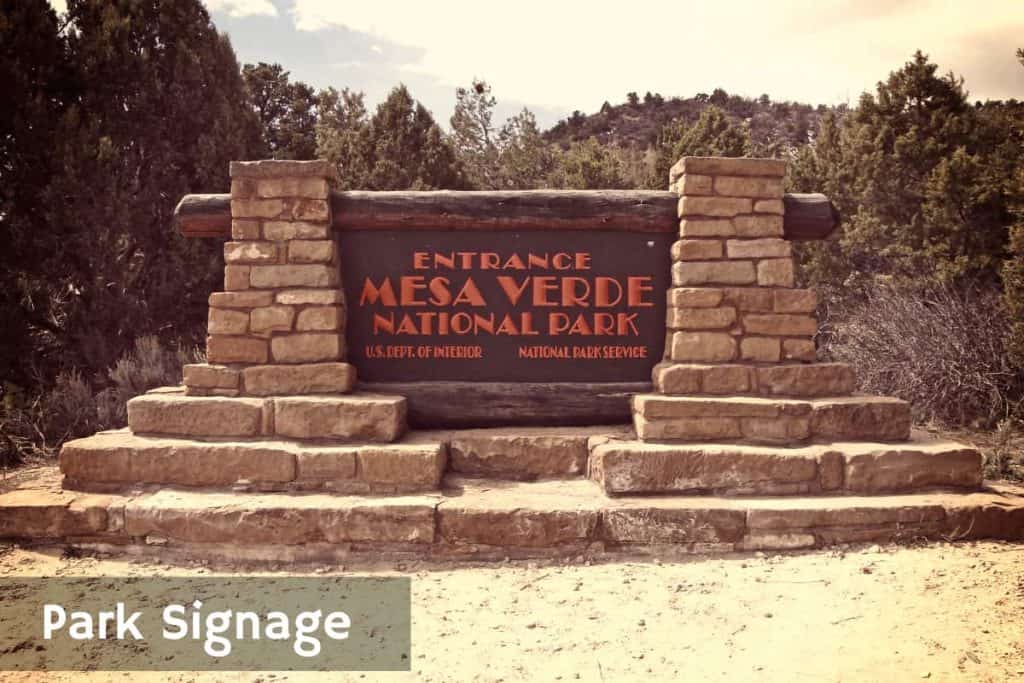
Home to 4,500 archaeological sites–including the 600 cliff dwellings that have made it world-famous–Mesa Verde National Park offers visitors an unparalleled opportunity to step into the past.
Located in southwestern Colorado, Mesa Verde is easily reached via U.S. Highway 160 either from Cortez to the west or Durango to the east.
Because Mesa Verde mixes both a treasure trove of archaeological wonders with natural splendor, it is unique in the National Park System and does require a fair bit of planning in order to be enjoyed fully.
The highlight of any trip to Mesa Verde National Park is a visit to the cliff dwellings, built by the Ancestral Pueblo People during the 13th century.
The most famous cliff dwelling, the Cliff Palace, is a sprawling complex of sandstone walls, rooms, and towers nestled precariously underneath a massive overhanging cliff.
During the summer months, visits to the Cliff Palace–as well as to the Long House and the nearby Balcony House–are by ranger-guided tours only, which require a ticket that can be purchased at the Visitor Center at the park entrance.
Since the drive from the park entrance to the cliff dwellings can easily take an hour depending on traffic, be sure to purchase these tickets beforehand.

Spruce Tree House, for example, is the best preserved cliff dwelling in the park and is free to visit as is the Step House, which includes a restored pit house.
Other archaeological sites are strewn throughout the park, including the Square Tower House and the Sun Temple.
The latter site, in addition to being an impressive archaeological site in its own right, also gives visitors exceptional views of the Cliff Palace.
Also remember that although the park is open 24 hours, the cliff dwellings and many archaeological sites are not, with most closing before dusk. Also, the Wetherill Mesa area, which includes the Long House and Step House, are closed October through April.
The rest of the park is open all year.
While the cliff dwellings are the main draw of Mesa Verde, it quickly becomes apparent to most visitors that history isn’t the only thing this park has to offer.
The road from the park entrance to the cliff dwellings, for example, snakes its way over mountains and through canyons, affording visitors spectacular views of the Mancos Valley and Montezuma Valley to the north.
Bicycling is also permitted on the main park road between the park entrance and Chapin Mesa, although it can be grueling even for experienced bikers and the narrow and twisting road make distracted drivers a problem.
While Wetherill Mesa Road is closed to bicycles, the Long House Loop, located at Wetherill Mesa itself, is open to bikes and, thankfully, closed to motorized vehicles.
Hiking is also a popular activity in the park, with many trails taking hikers through scenic landscapes and past historic sites.
Although many trails are relatively short, most of them include steep elevation changes that can make them difficult in hot weather or after rainfall.
Because of the sensitive archaeological nature of the park, hikers are required to stay on marked trails at all times.
Two trails, the Spruce Canyon Trail and the Petroglyph Point Trail, require hikers to register beforehand either at the trailhead or at the Chapin Mesa Archaeological Museum.
While the main sights can be done in one day, those looking to visit at a more relaxed pace will probably want to stay a night or two.
Far View Lodge is the park’s only hotel and has restaurants, gift shops, groceries, and other amenities. Located at the junction of the main park road and Wetherill Mesa Road, it is also a prime spot for exploring the various attractions in the park.
The park also has a large campground, Morefield Campground, located near the park entrance, which has hookups, a gas station, grocery store, RV dump station, amphitheater, and laundromat.

Many of the park’s best trails are also located here. While the campground is first-come, first-served all year round, space is almost always available. Both Morefield Campground and Far View Lodge are open only from spring to fall.
Backcountry camping is not permitted.
Mesa Verde National Park is one of the few places where history and nature combine to provoke awe and wonder in visitors.
One of America’s first World Heritage Sites, Mesa Verde continues to be an inspirational place entirely unlike any other in the world.

Cappuccino coffee is one of the most popular coffee drinks in the world.
It’s made from a freshly prepared espresso that has its flavor enhanced with hot milk and steamed milk foam. Then, more often than not, cappuccino is topped off with a sprinkling of chocolate or cinnamon.
Yet, the drink so many people know and love has not always been served the way it is today and the true origin of cappuccino coffee remains unknown.

Cappuccino coffee originated in Italy and is believed to be named after the “cappucio” hoods worn by Franciscan monks.
Cappuccino translates as “little hood” and the color of the monks’ hoods bears a striking resemblance to the shade of brown that results from the mixing of coffee and milk in a cup of cappuccino.
Although there can be little doubt about the reason cappuccino coffee received its name it is unclear how long ago the drink was invented.
One popular story states the drink is the invention a Capuchin Monk called Marco d’ Avaiano and that he produced the world’s first ever cappuccino coffee in 1683, after the Battle of Vienna. It’s a great story, but there is no historical evidence to back it up.

Cappuccino coffee drinking grew in popularity in 1901.
Up until then coffee was made in small batches.
This changed when a young man from Milan, called Luigi Bezzera, decided the coffee making process was too slow and invented the world’s first espresso coffee machine. Bezzera’s machine made it easy to make a cup of strong, black espresso in around 30 seconds and the fact that an espresso could be produced so quickly made it easier to produce other coffee drinks, including cappuccino.
Bezzera’s creation may have made it easier to make a cappuccino, but early cappuccinos lacked the thick texture that modern-day coffee drinkers know and love.
The milky foam was a later addition that came about when enterprising coffee machine manufacturers decided to add steam wands to their machines.
After the foam was introduced to the drink adding sprinkles of cinnamon or chocolate was an easy next step.

By the 1950s, Cappuccino was a firm favourite with coffee drinkers all over Europe.
The drink did not become popular in America until the early 1980s.
Drinking coffee was already an important part of American culture, but many Americans preferred to take their coffee black and a visit to a coffee shop was often more about the food than the drink that accompanied it.
Things changed when a few entrepreneurs noticed how things were done in Europe, where coffee drinking was as much about the experience as the beverage. This was very different to America and the entrepreneurs realized coffee had a potential that was yet to be taken advantage of in America.
However, when it came to coffee drinking, the cultural differences between America and Europe were significant. It was the norm for American’s to pop into a coffee shop, grab a quick coffee and then go, only staying longer if they wanted something to eat.
The entrepreneurs needed a way to encourage customers to stay longer and order more drinks. They achieved this by offering a wider variety of options including lattes, caffè cremas and, cappuccinos.
One only has to look at the present popularity of Starbucks to see how successful the move turned out to be.

These days anyone who wishes to do so can pop down to the local supermarket and buy a sachet of cappuccino coffee to prepare at home and the hardest part of a coffee shop visit may be choosing to opt for a cappuccino or taking one of the many other coffee options that are on offer.
Enjoying a cappuccino has become so easy to do it has become equally easy to take the drink for granted. That is a pity because the beverage has a long and interesting history.
The modern-day cappuccino is not just the result of a monk’s experimentation with coffee beans, water, and milk; or a Milanese man’s desire to speed up the coffee making process.
Cappuccino is a drink that has evolved and improved over the years. In fact, the history of cappuccino is as rich and colorful as the drink itself.